


Every group leader knows the feeling. The call comes in. An inspector is on their way to one of your settings. And somewhere in the back of your mind, a quiet question: what are they going to find?
Not because you think the setting is failing. Because you do not know for certain. And not knowing is the uncomfortable part.
So here is a different question. What if you already knew?
Prediction is not about guessing. It is about honest evaluation.
Let us be clear from the start. Nobody can tell you exactly what an inspector will write. Inspection involves professional judgement, a particular day, and a particular set of conversations. There is no crystal ball.
But there is something close to it.
If a setting evaluates itself honestly — against the exact criteria an inspector will use, with real evidence behind every judgement — then the inspection outcome should not come as a surprise. The report should read like confirmation, not revelation.
That is what prediction really means in this context. Not forecasting. Knowing.
Why most Ofsted reports still surprise people
In most settings, self-evaluation gets written, filed, and forgotten. It is done once, often in a hurry, and often with half an eye on how it will look to someone else. Nobody is doing this badly on purpose — they are just busy running a setting.
The result is a self-evaluation that describes the setting as it was on one afternoon, in language that may or may not match what Ofsted is looking for. By the time an inspector arrives, it is out of date. Sometimes it was never quite accurate in the first place.
At group level, the problem multiplies. Different settings, different formats, different degrees of rigour. One manager rates generously. Another is harder on themselves than any inspector would be. You cannot compare what is not comparable, and you cannot predict what you cannot see.
So the report arrives. And it tells you something you did not know.
The new toolkit changes what is possible
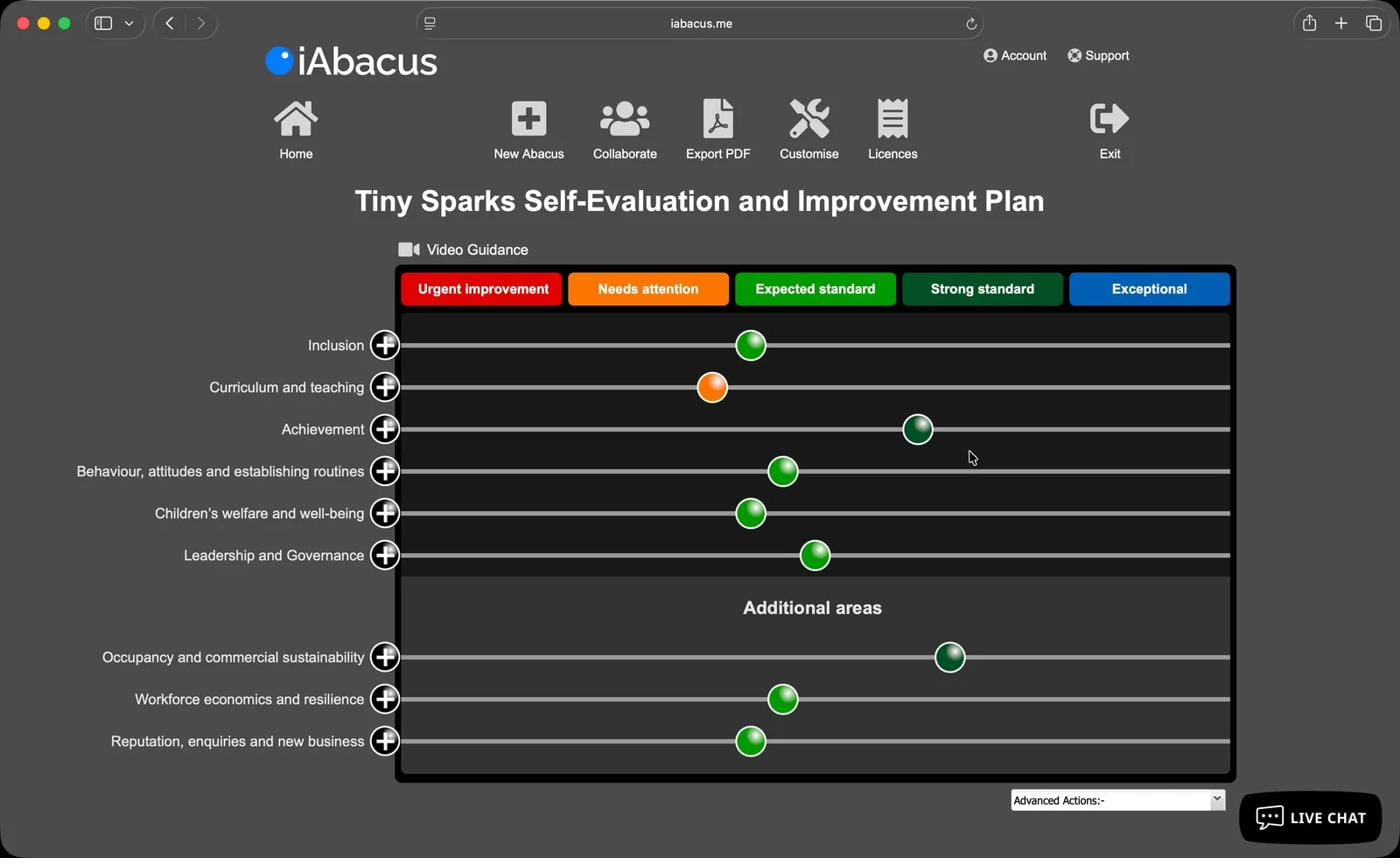
The Ofsted Early Years Inspection Toolkit, in force since 10 November 2025, gives every setting the same framework. Six evaluation areas. The same five-point scale — Urgent Improvement, Needs Attention, Expected Standard, Strong Standard, Exceptional. The same grade descriptors, written in the same language.
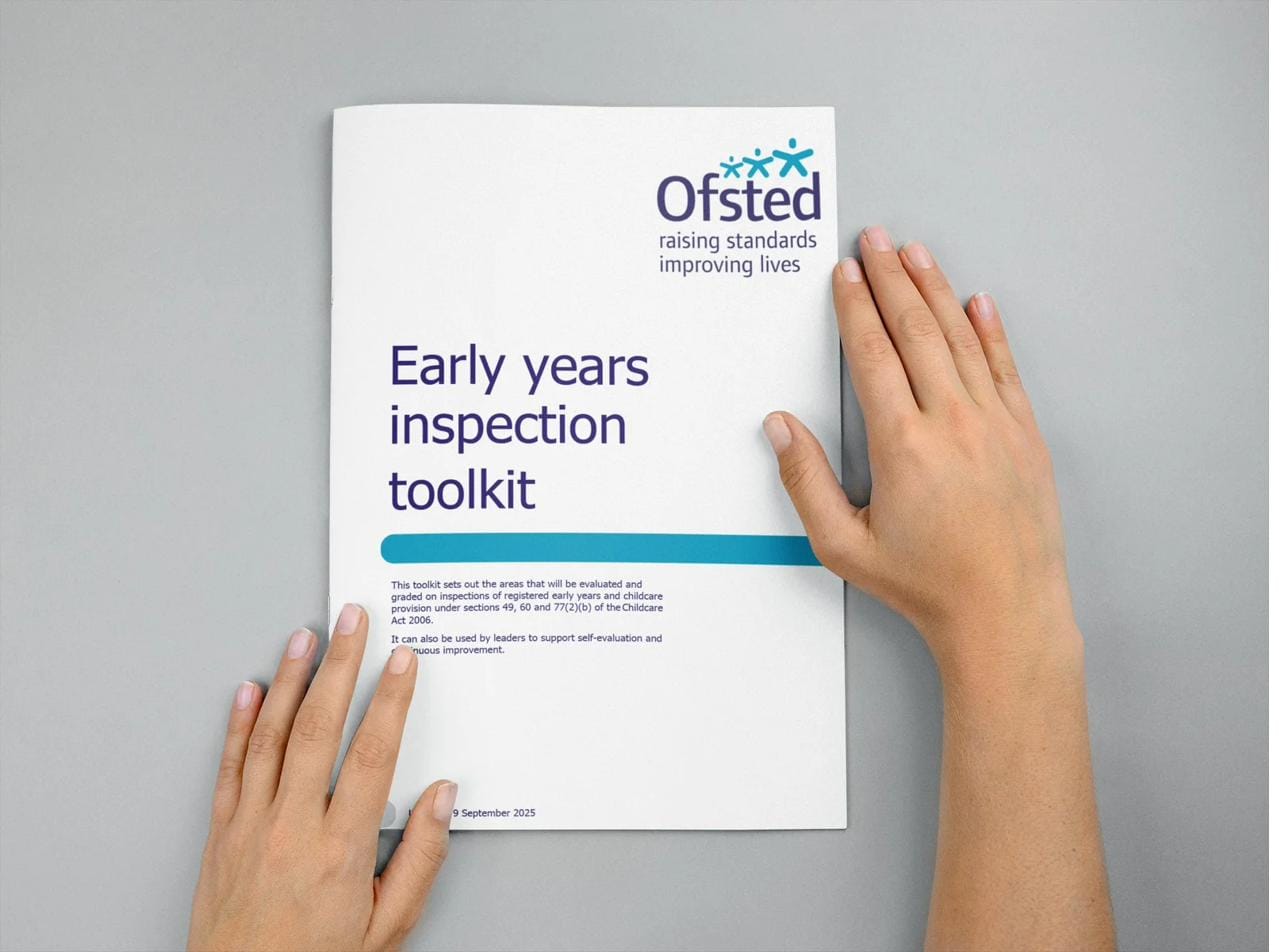
And crucially, Ofsted have been explicit that the toolkit is not only for inspectors. In their own words, it "can also be used by leaders to support self-evaluation and continuous improvement."
That is the key. If the criteria an inspector uses are the criteria your managers use, then the gap between self-evaluation and inspection starts to close. Your settings are not guessing at what matters. They are working against the same standard, in the same language, all year round.
What honest self-evaluation actually looks like
Prediction only works if the evaluation is honest. That means it cannot be a performance for head office. It has to be something the manager does for themselves. In iAbacus, every evaluation follows the same five steps.
Step 1 — Judgement
The manager starts with an honest first view of where their setting sits in one evaluation area. Not against a target. Not for an audience.
Step 2 — Criteria
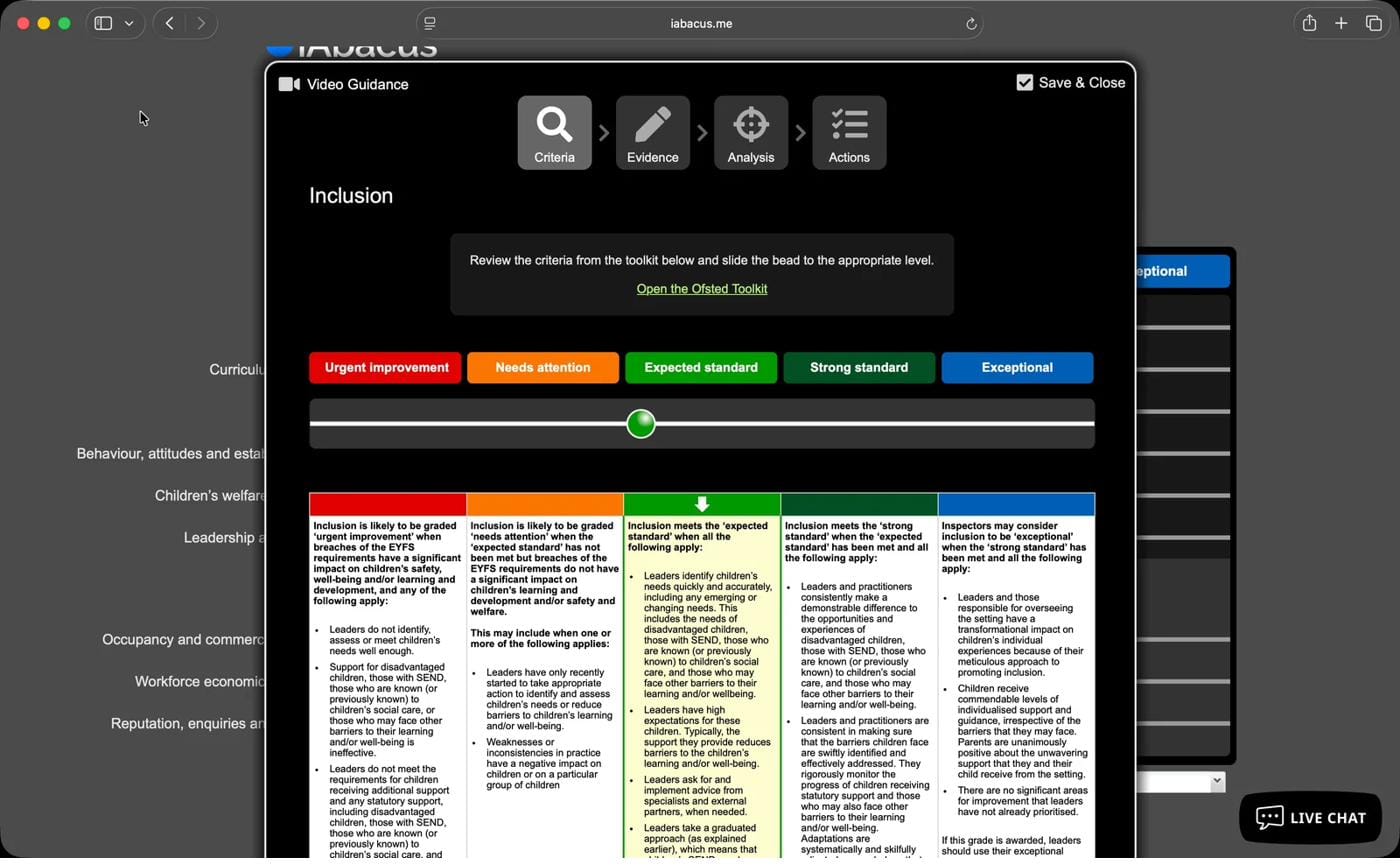
They test that view against the grade descriptors, taken directly from the Ofsted toolkit, and move the bead if they need to. This is where the honest view meets the formal standard.
Step 3 — Evidence
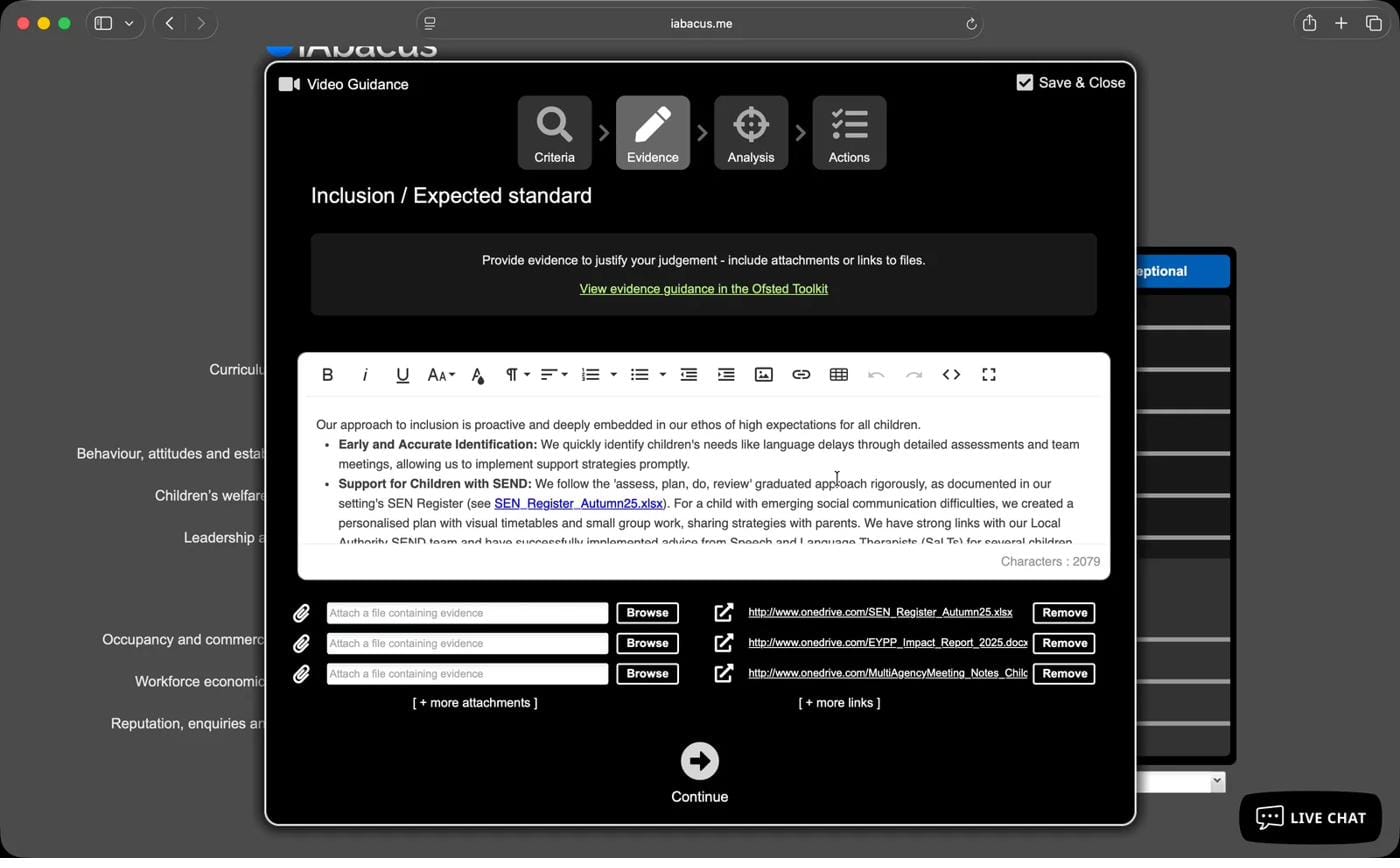
They back up their position with real evidence — commentary, documents, links. The honest story behind the number.
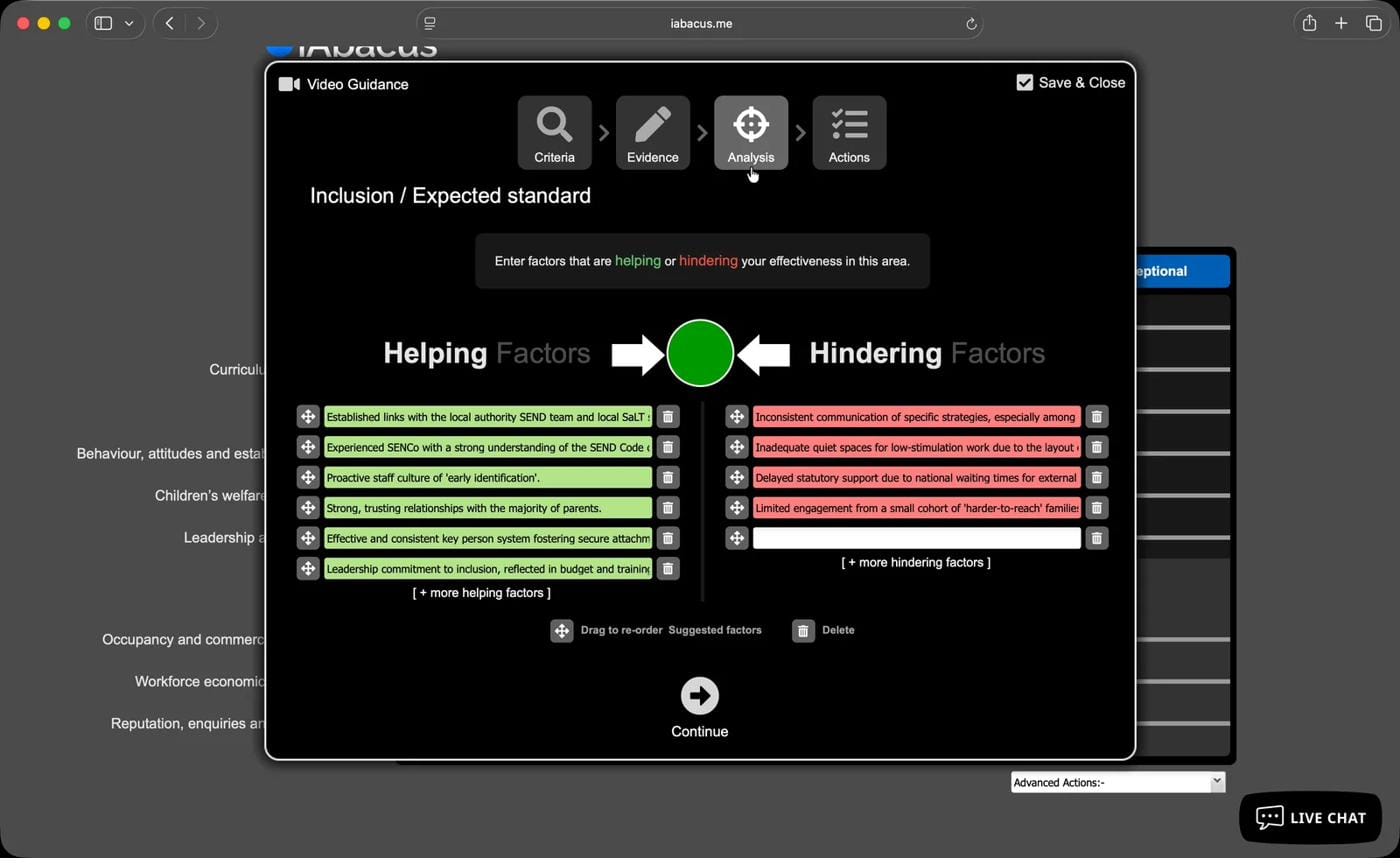
Step 4 — Analysis
They identify what is helping the setting perform at this level, and what is hindering it from going further. Green on the left. Red on the right. This is the step no data dashboard can replicate.
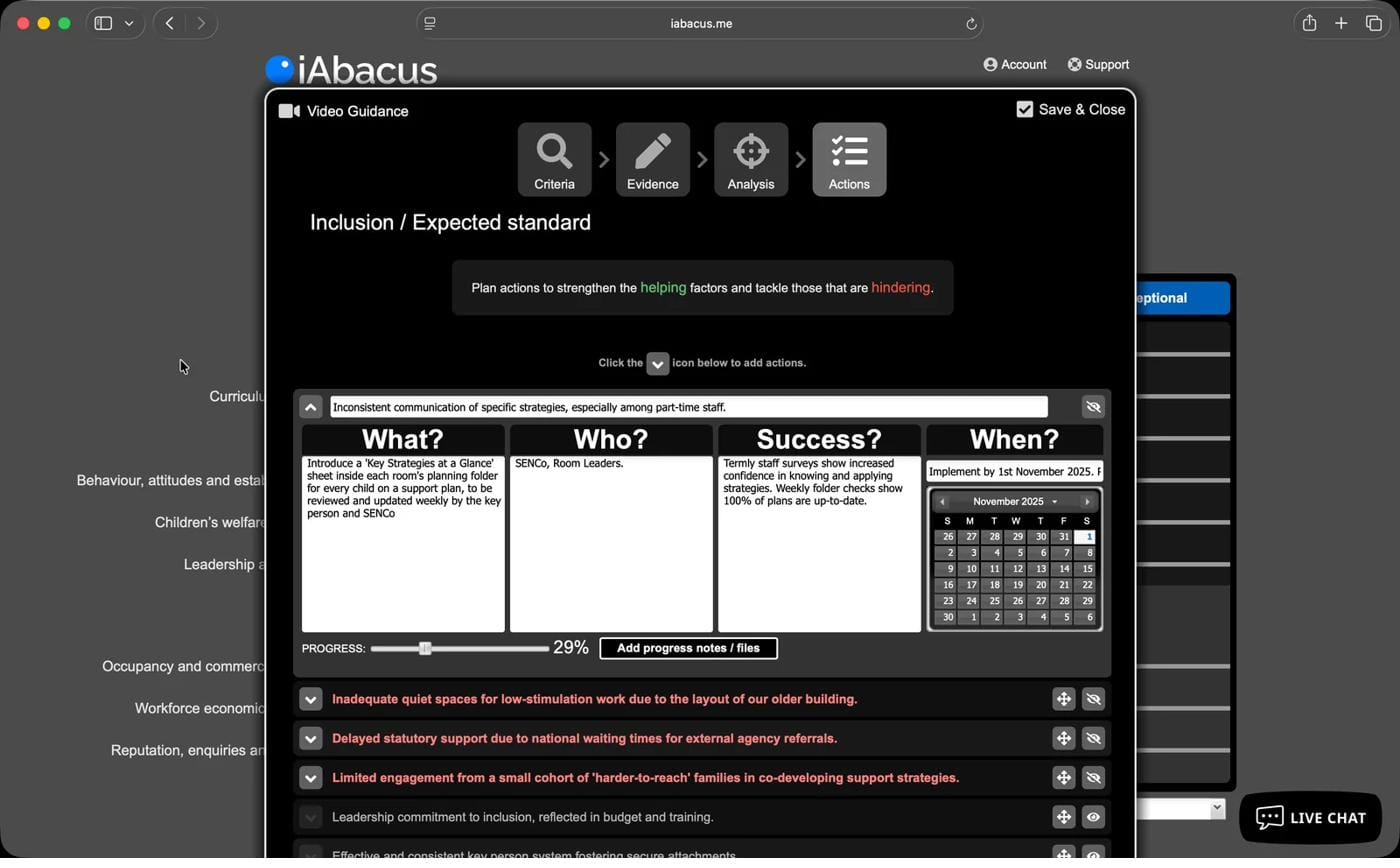
Step 5 — Actions
Every hindering factor becomes a specific action — who, what, by when, and what success looks like. Progress tracked.
Not a document for someone else. Not a compliance exercise. When that process runs continuously, the self-evaluation stops being a snapshot. It becomes a living improvement plan that updates as the setting progresses. And a living picture is one you can trust.
From one setting to the whole group
Now imagine that happening in every setting you lead.
As each manager works through their evaluation, the Nursery Group Dashboard builds itself. No chasing. No compiling. No reports written upwards. Every setting on the same framework, every judgement backed by evidence, all visible in one place.
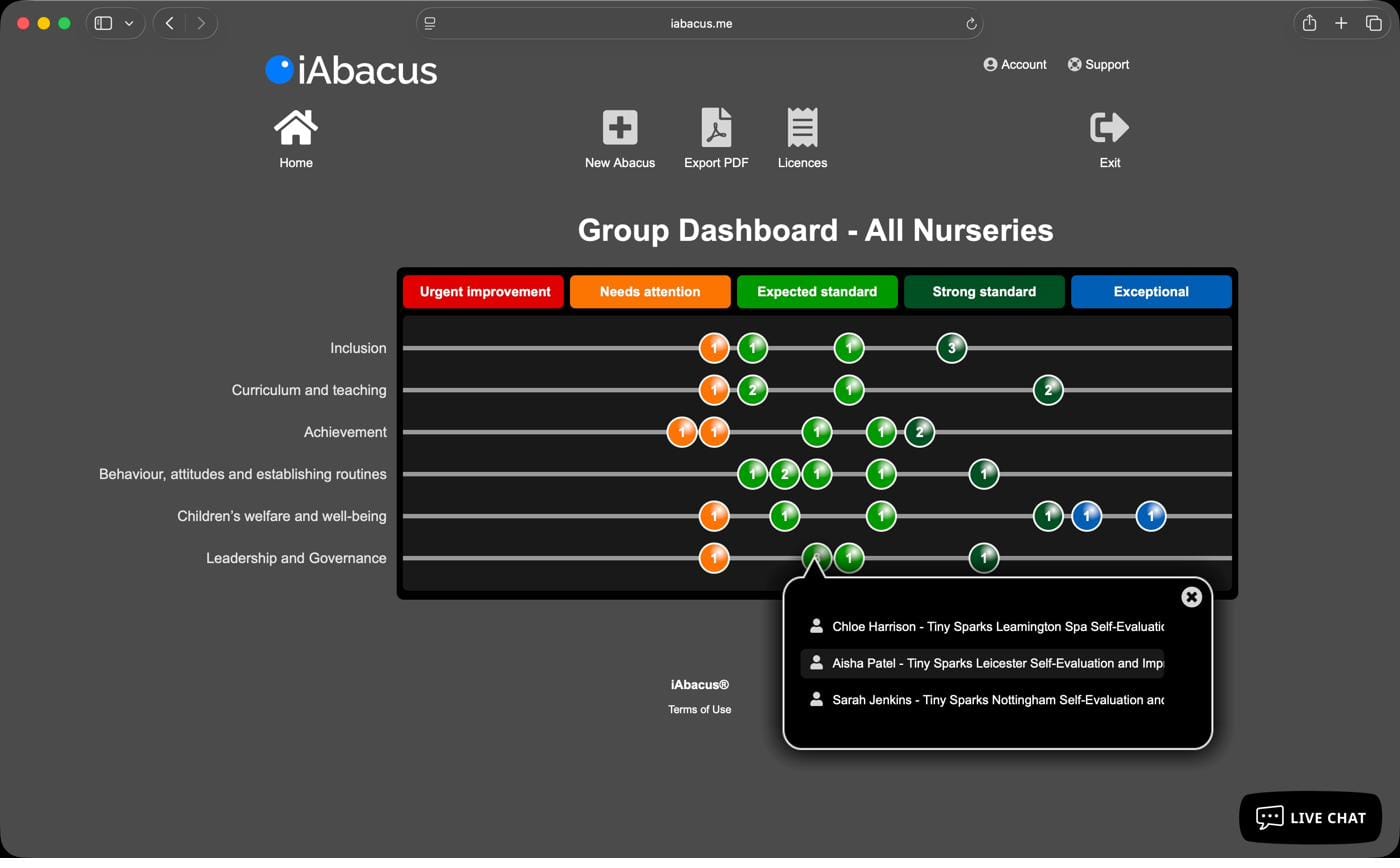
Suddenly the questions change. Not "what will the inspector find?" but "which settings are sitting at Needs Attention in curriculum and teaching, and what are they doing about it?" Not "I hope that visit goes well" but "that setting has been Strong across the board for six months, and the evidence shows why."
You can see which settings are likely to be ready and which need support — long before an inspector sees it. You can spot excellence in one setting and share it where it is needed most. And when the call comes, you already know what the report is likely to say.
That is as close to prediction as anyone can honestly get. And it is a great deal closer than most groups are today.
The real prize is not the prediction
Here is the thing worth saying plainly. Predicting your Ofsted outcome is useful. But it is not really the point.
The point is that a setting which evaluates itself honestly, against the right criteria, with a genuine plan to improve, is a setting that gets better. The accurate prediction is a by-product of doing the work properly.
Groups that get this right do not dread inspection. Not because they have gamed it, but because nothing an inspector says will be news to them. The evaluation has been ongoing. The evidence is already there. The improvement is already happening.
No surprises on the day. Just confidence.
Find out more
See how the iAbacus Nursery Group Dashboard helps every setting in your group evaluate honestly against the new Ofsted Early Years Toolkit — and gives you a live picture of where every setting stands — at ngd.iabacus.com.
Any nursery group can trial the complete solution in one setting at no cost. No obligation, no contract, and no catch.


