


Professional development that starts with the teacher's own voice is more honest, more sustainable, and more effective. Here's why — and how iAbacus makes it possible.
There is a ritual that plays out in schools every autumn. A teacher sits across a desk from their line manager. A form is opened. Targets are discussed — or, more often, handed down. A signature is obtained. The form is filed.
And then, for many teachers, nothing much changes.
It is not that schools do not care about professional development. Most do, deeply. The problem is structural. Too much of what passes for CPD and performance management is still done to teachers rather than with them. It starts with someone else's judgement, someone else's framework, someone else's priorities. The teacher's own voice — their honest assessment of where they are, what they need, and what is getting in the way — is an afterthought, if it features at all.
The consequences are predictable: professional development that feels irrelevant, appraisal conversations that feel threatening, and teachers who learn to say the right things without any meaningful change to their practice.
There is a better way.
What Happens When You Start With the Teacher
The iAbacus Teacher Reflection and Growth Plan is built on a deceptively simple idea: that the most important judgement in any professional development process is the teacher's own.
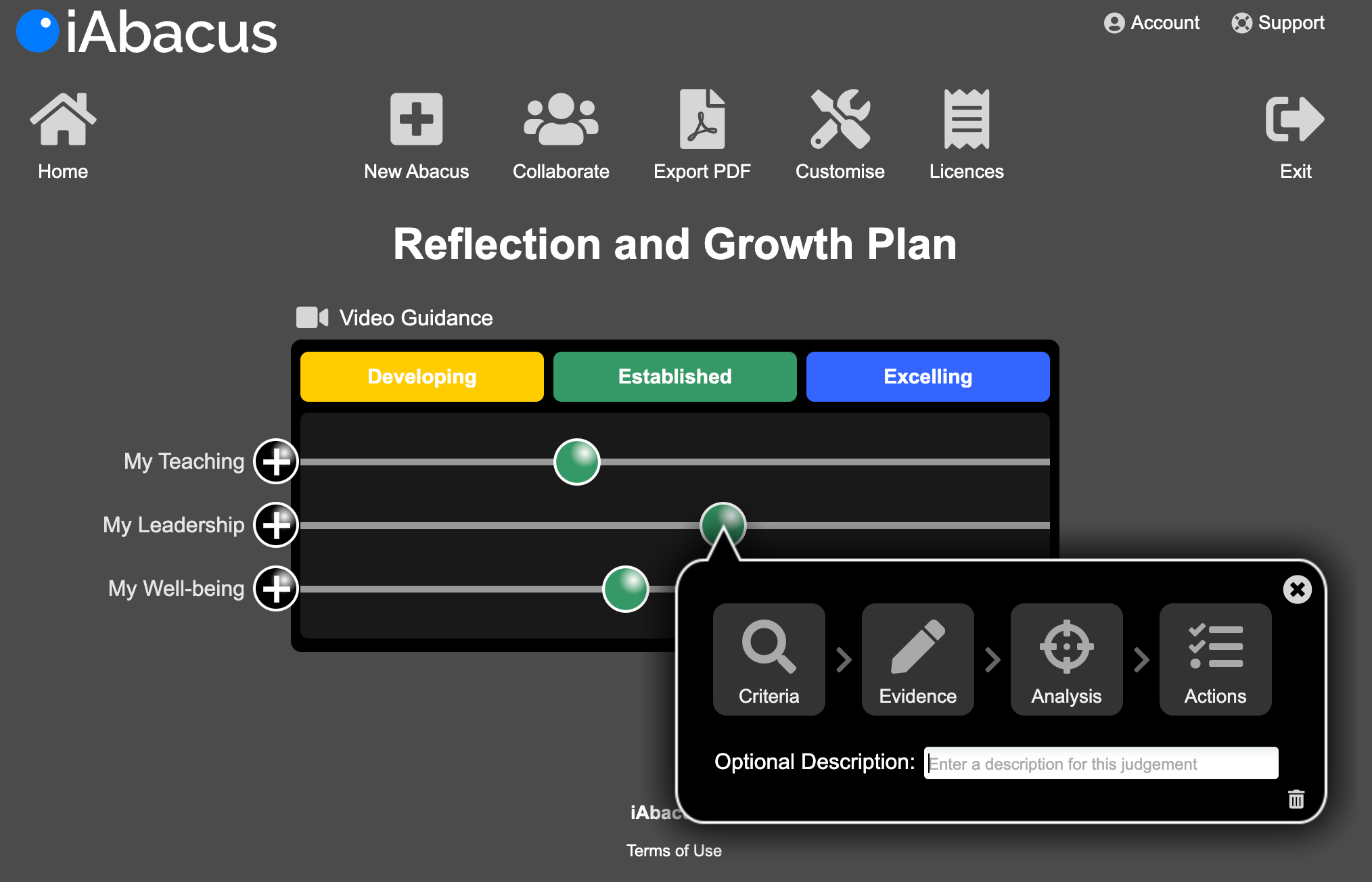
Rather than beginning with an observer's verdict or a manager's assessment, every iAbacus reflection starts with the teacher positioning their own bead — a visual, intuitive act that asks: where am I right now?
That single shift changes everything.
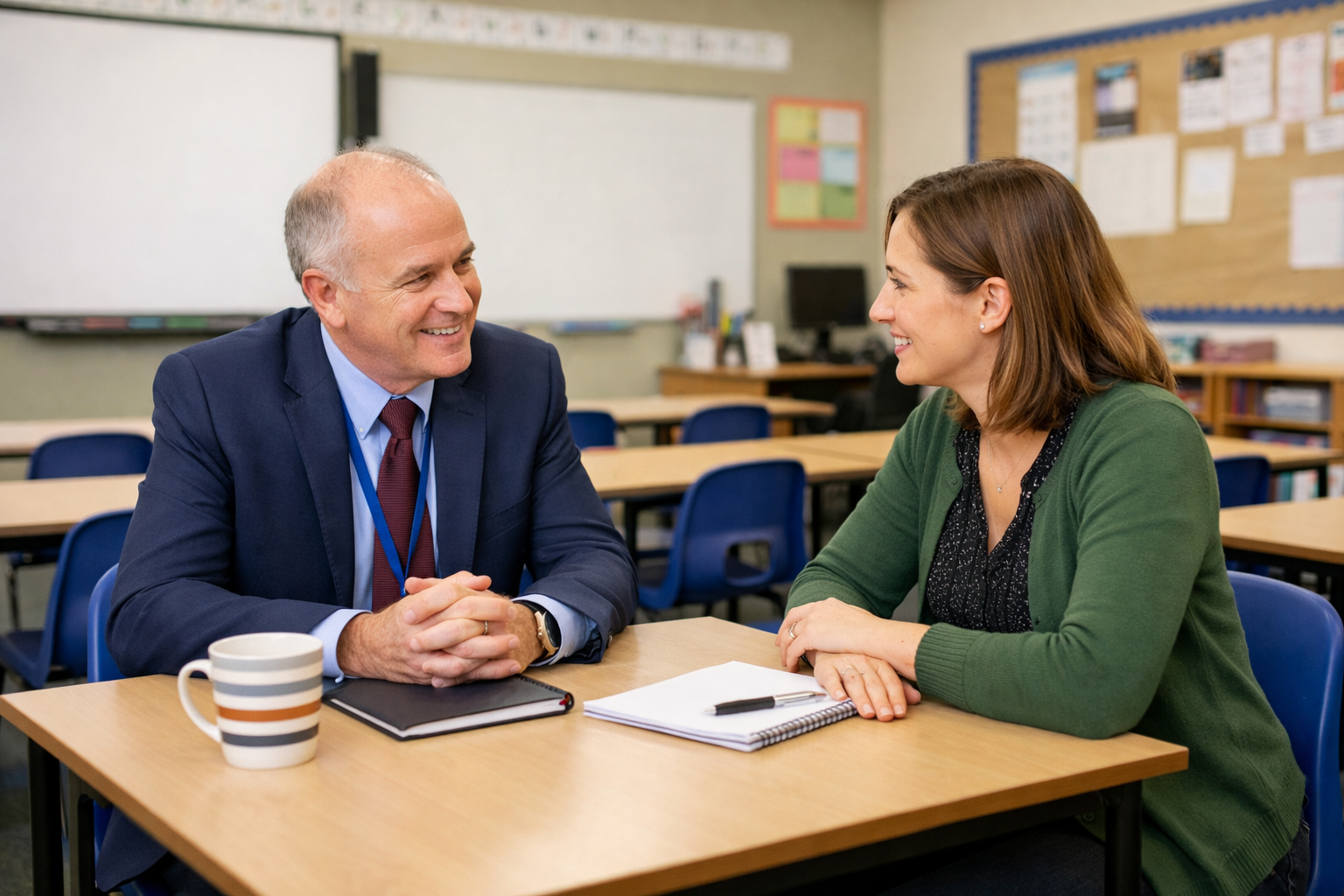
When a teacher makes their own judgement first, they are no longer a passive recipient of someone else's view. They are the author of their own professional narrative. The conversation that follows — with a line manager, a coach, or a colleague — is built on a foundation of honest self-assessment rather than performance or defensiveness.
This is not naïve. Self-assessment without structure can be wishful thinking. But iAbacus provides the structure: three clearly defined levels — Developing, Established, and Excelling — each with an opening statement, an impact statement, and a set of observable criteria that describe what that level actually looks like in practice.
Teachers are not left to guess. They are given a mirror — and invited to look honestly into it.
A Process That Goes Beyond Self-Assessment
Positioning a bead is just the beginning. What makes the iAbacus approach genuinely transformative is the four-step process that follows.
Criteria invites the teacher to read the descriptors for their chosen level and moderate their judgement accordingly. Is this really where I am? Does this actually describe my practice?
Evidence asks the teacher to describe — and where possible, demonstrate — the evidence that supports their self-assessment. Not a list of things they have done, but a meaningful account of impact. Files can be attached. Web links can be added. The evidence is real, not reconstructed at the point of an appraisal conversation.
Analysis is where reflection deepens. What are the factors — people, resources, circumstances — that are helping or hindering this aspect of practice? This is the step that too many professional development frameworks skip entirely. A teacher who can articulate clearly what is helping and what is getting in the way is a teacher who is already thinking like a professional learner.
Actions brings it all together. Not a generic target, but a specific plan: to strengthen what is helping and address what is hindering. Actions that belong to the teacher, because they grew from the teacher's own analysis.
Together, these four steps create not a one-off exercise but a continuous cycle — one that generates genuine, usable evidence for professional conversations and builds, over time, a compelling picture of professional growth.
The Whole Professional, Not Just the Classroom Teacher
One of the most important design decisions in the iAbacus Teacher Reflection and Growth Plan is its scope.
Too often, teacher performance management focuses narrowly on what happens in the classroom. The wider reality of a teacher's professional life — their leadership responsibilities, their sense of purpose, their well-being — is treated as separate, or irrelevant, or too personal to discuss.
iAbacus rejects that separation.
The template addresses three Areas: My Teaching, My Leadership, and My Well-being. For classroom teachers without formal leadership responsibilities, the focus is My Teaching and My Well-being. For teachers who lead teams, departments, or aspects of school improvement, My Leadership is added to the picture.
This integration matters. A teacher who is struggling with well-being cannot fully excel in the classroom. A middle leader who lacks clarity about their role cannot effectively support their team. By bringing these dimensions together in a single, honest process, iAbacus treats the teacher as a whole professional — not a set of competencies to be assessed in isolation.
Connecting Individual Growth to Whole-School Improvement
The Teacher Reflection and Growth Plan also includes a bespoke Focus Area — a fourth dimension that allows schools to connect every teacher's individual reflection directly to a whole-school improvement priority.
Whether the priority is literacy across the curriculum, assessment for learning, behaviour and relationships, or curriculum design, the Focus Area creates a powerful thread: every teacher in the school reflecting on the same shared priority, from their own classroom perspective, generating evidence and actions that are both personal and collective.
This is not a top-down imposition. The bespoke Focus Area uses the same Criteria → Evidence → Analysis → Actions structure as every other part of the template. Every teacher still starts with their own honest judgement. The difference is that those individual judgements, taken together, become a school-wide picture of where the staff is on the shared priority — and where the journey needs to go next.
From Individual Reflection to Collective Intelligence
For headteachers and senior leaders, iAbacus offers something even more powerful: the ability to see the whole staff picture at once.
Using the Overlay and Stack features, a headteacher can bring together the reflection abacuses of every member of staff onto a single screen. The individual bead positions of all teachers are displayed simultaneously — creating an immediate, honest visual overview of where the whole school is collectively across My Teaching, My Leadership, My Well-being, and the shared Focus Area.
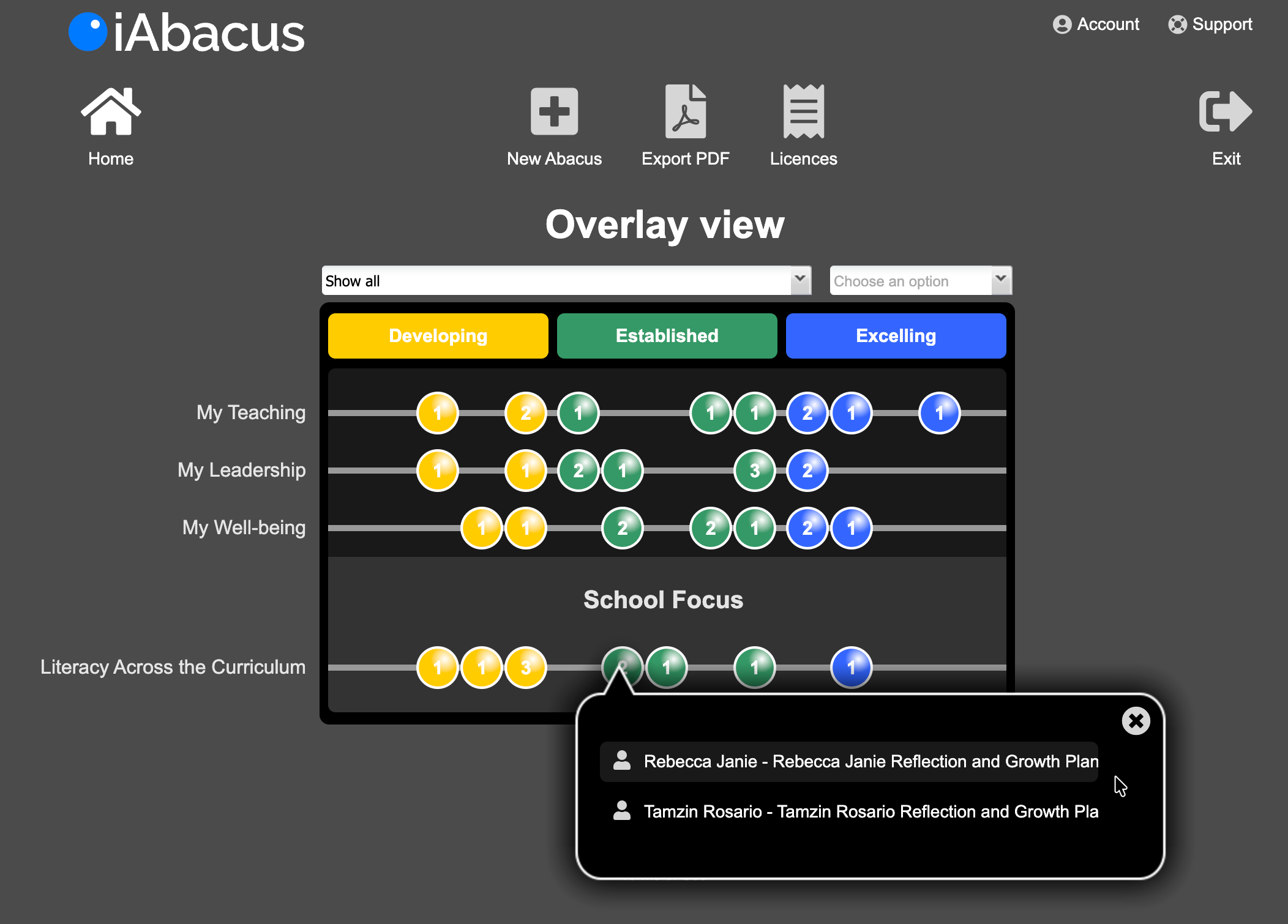
This is not surveillance. It is professional intelligence. The combined picture is a basis for conversation, not judgment — a way of identifying patterns, spotting individuals who may benefit from additional support or challenge, and planning CPD that responds to what teachers actually need, not what a calendar says they should have next.
For schools within a multi-academy trust, the same features can be applied at trust level — giving trust leaders a panoramic view of professional development and improvement across all their schools.
The Question Worth Asking
The most honest question any headteacher or CPD lead can ask is a simple one: is our professional development process done with our teachers, or to them?
If the answer is uncomfortable, it is worth knowing. And it is worth changing.
iAbacus does not promise a quick fix. It offers something more durable: a structured, teacher-led process that starts with honest self-assessment, builds through evidence and analysis, and generates actions that belong to the people who have to carry them out.
That is what genuine professional development looks like. And it starts with giving teachers back the pen.
If this resonates with how you'd like professional development to work in your school, we'd love to have an informal chat. No pitch, no pressure — just a conversation about your school and whether iAbacus might help. Book a time that suits you at meet.iabacus.com


