


The Strong and Flourishing Catholic Multi-Academy Trust Framework is one of the most thorough articulations I've seen of what a great Catholic trust actually looks like. Six pillars, from Catholic Life and Mission through to Finance and Operations. Close to forty themes beneath them. For each one, a rich descriptor of what "strong and flourishing" means, a generous list of evidence sources, and three levels of judgement to weigh yourself against.
It is, quite rightly, endorsed by the Confederation of School Trusts and aligned with the DfE's high-quality trust framework. It is the product of a great deal of careful thinking, and it sets a genuinely inspiring bar for what a Catholic trust can be. The question that interests me is a practical one: how do we help busy leaders work with something this rich, week in and week out?
Before I get into that, here's a short walkthrough showing what this looks like in practice — it's me taking you through the whole process from start to finish:
A companion to the framework
Any leader knows the gap between a document you admire and a document you use. The richer and more complete a framework is — and this one is admirably complete — the more it deserves a simple, repeatable way of working alongside it. Not a replacement for it, and certainly nothing stripped back. A companion: something that takes the framework as written and makes it effortless to pick up, return to, and act on.
That was the whole aim. Keep every theme, every descriptor, every evidence source exactly as the authors intended. Change only one thing — how easy it is to work with, day to day.
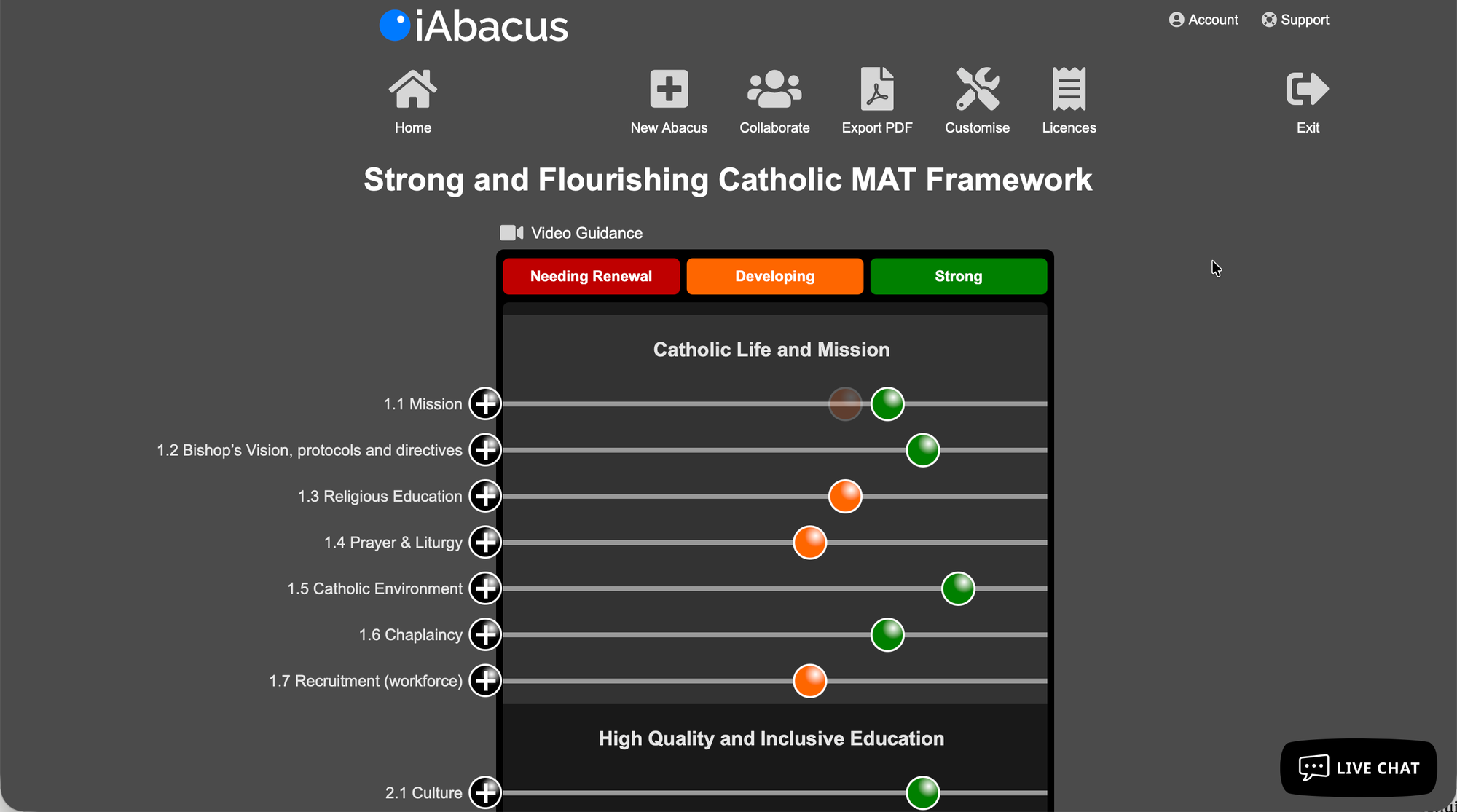
Keep the thinking, ease the doing
The framework's depth stays exactly where it is. What iAbacus adds is the experience of working with it. Behind each bead sits the same short, proven sequence — check the criteria, set out the evidence, analyse honestly, plan the actions — a way of working refined in schools for over fifty years.
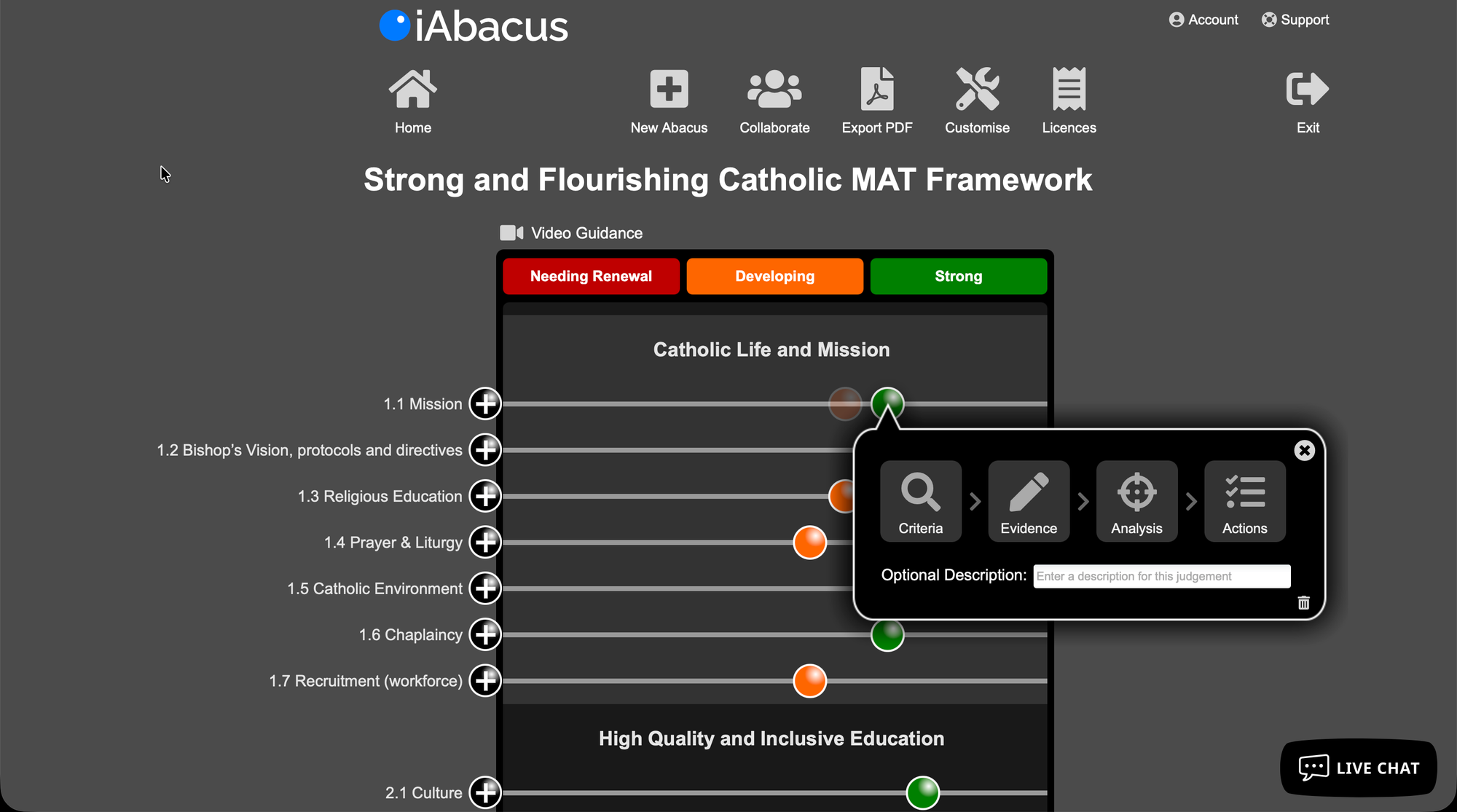
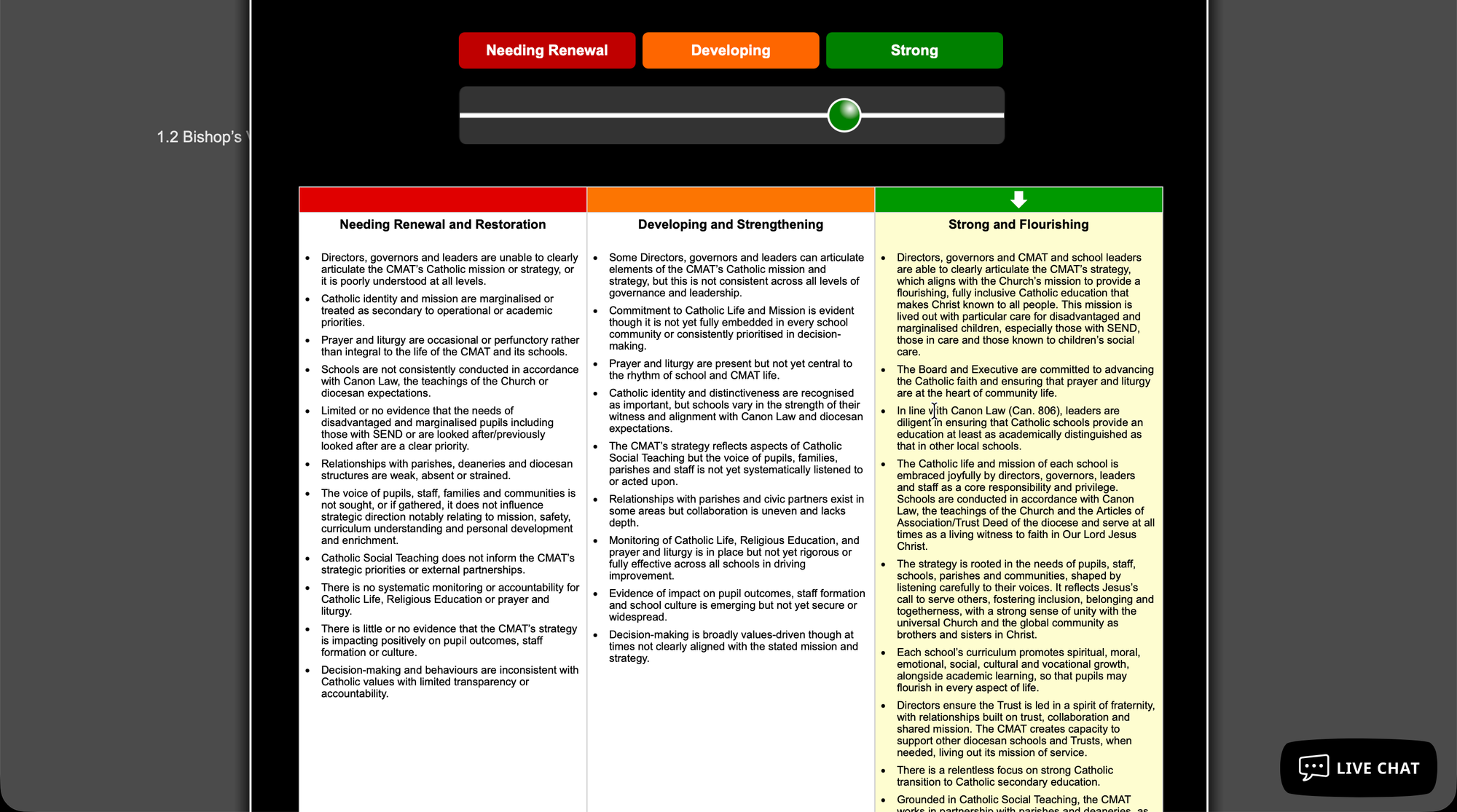
Step one — check the judgement against the framework. The moment you make a judgement, the framework's own descriptors for that theme appear beside it. You're checking your instinct against the actual criteria, not a half-remembered version of them.
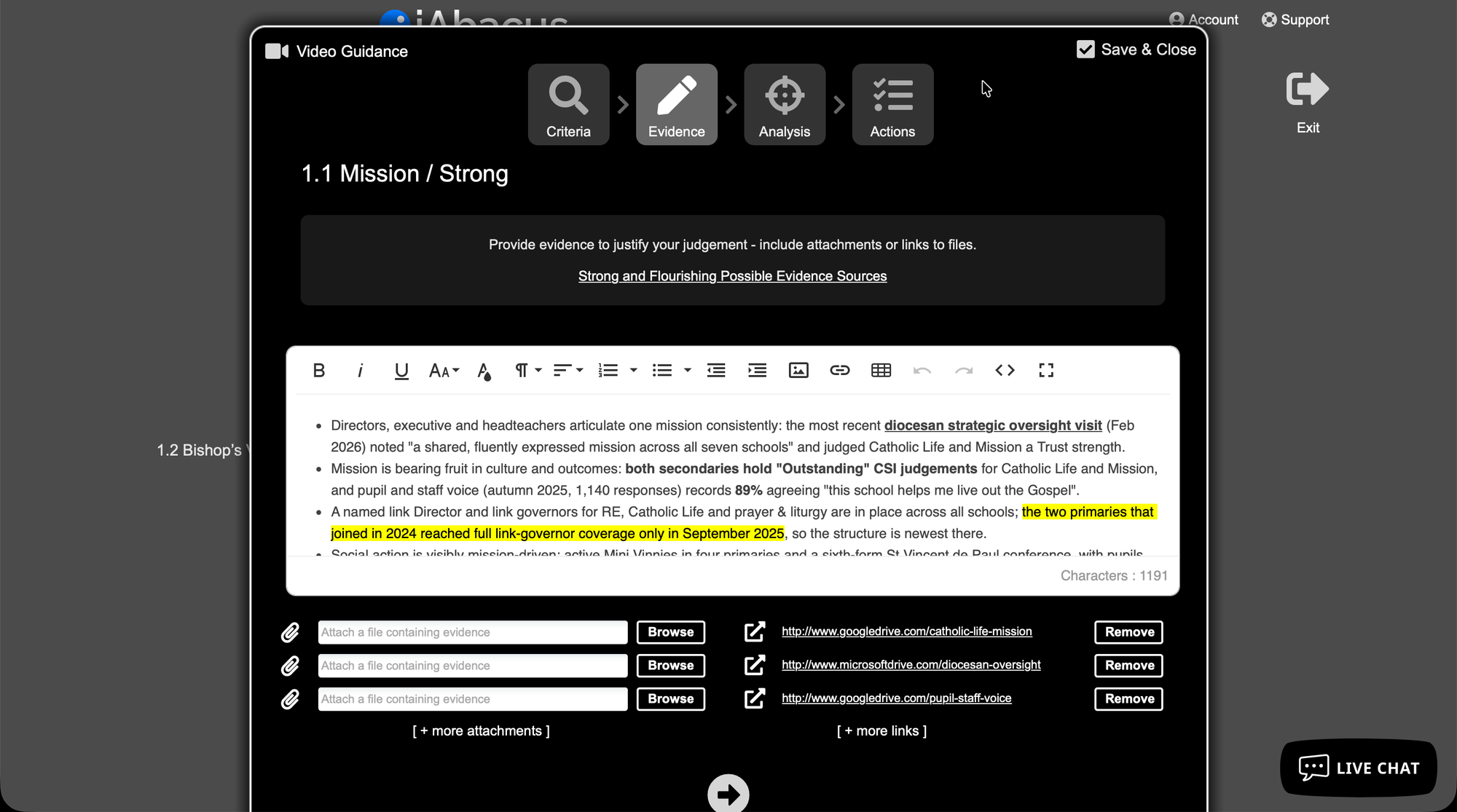
Step two — point to the evidence you already hold. You signpost what you already have — and the framework is clear that this should be evidence generated through normal operations, not a file built to impress. Attach files, link to drives, write as much or as little as you need.
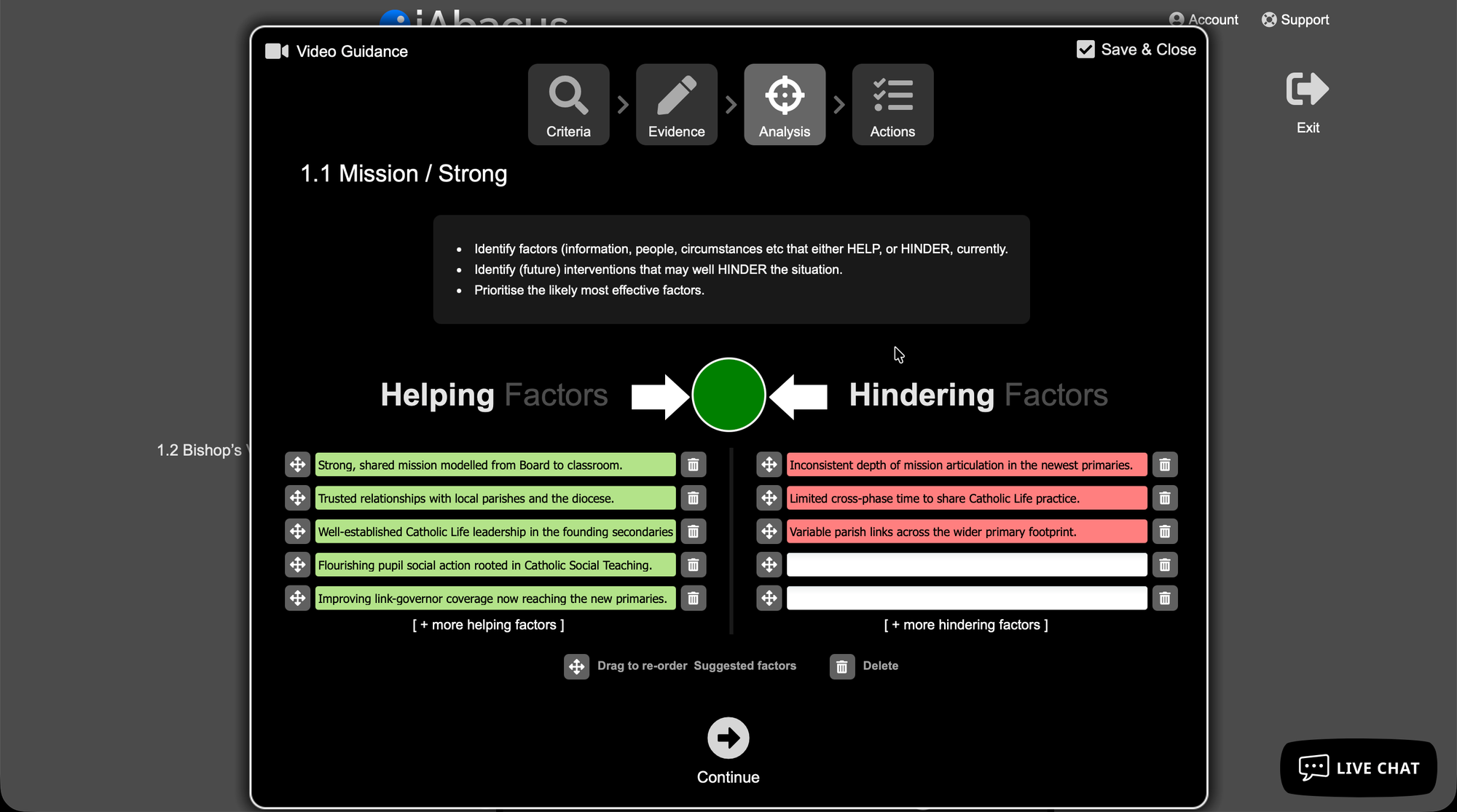
Step three — analyse what's helping and what's hindering. A simple force-field analysis: set down honestly what is pushing you forward and what is holding you back, then prioritise. It's the conversation a good leadership team wants to have anyway, given a clear shape.
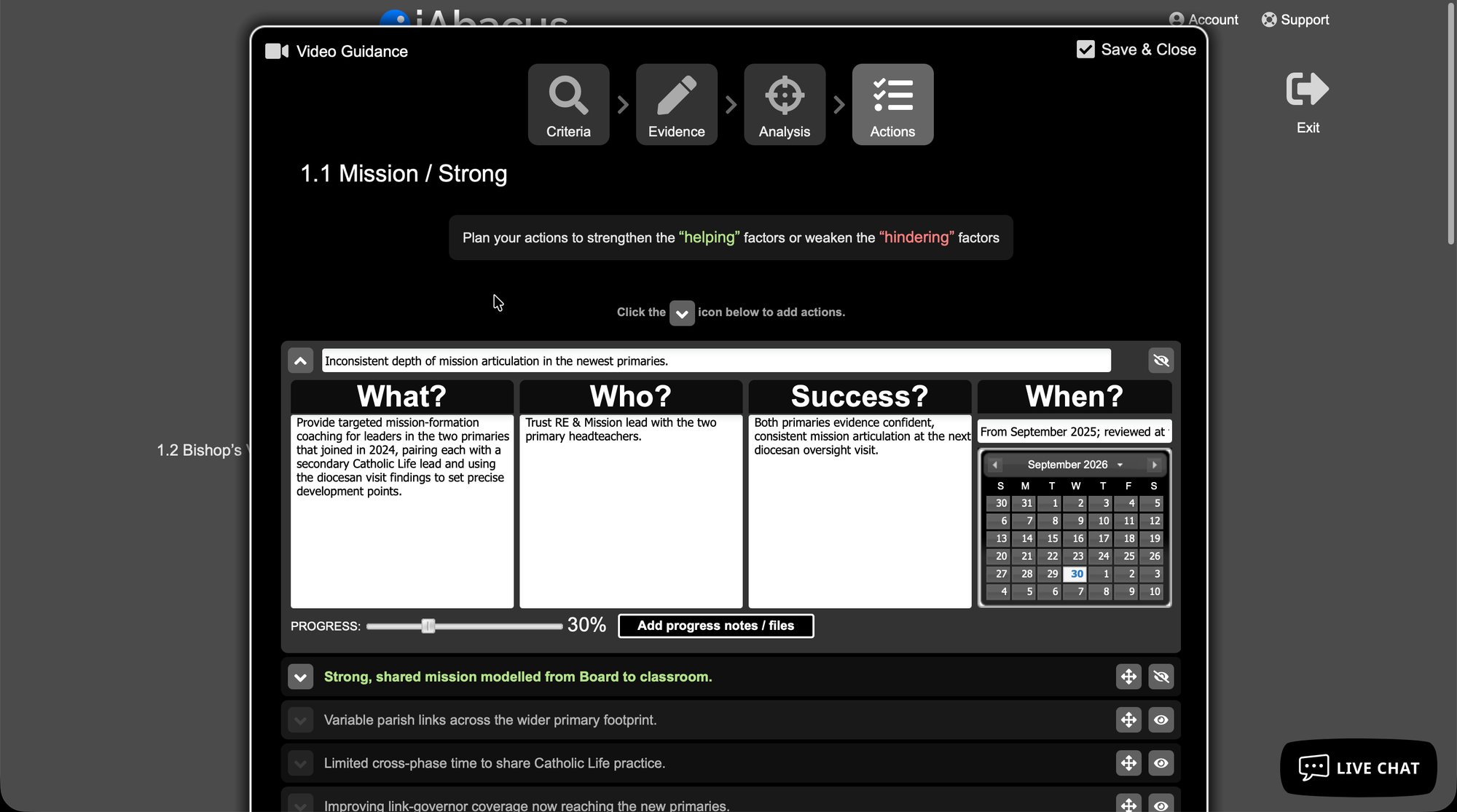
Step four — plan the few actions that matter. You choose the handful of actions that will move you forward, each with what, who, what success looks like, and by when — plus a progress slider to keep it live through the year rather than frozen in September.
When the way of working is this clear, more of the team can take part — and the framework becomes a living conversation rather than an annual event.
Why simple is not the same as shallow
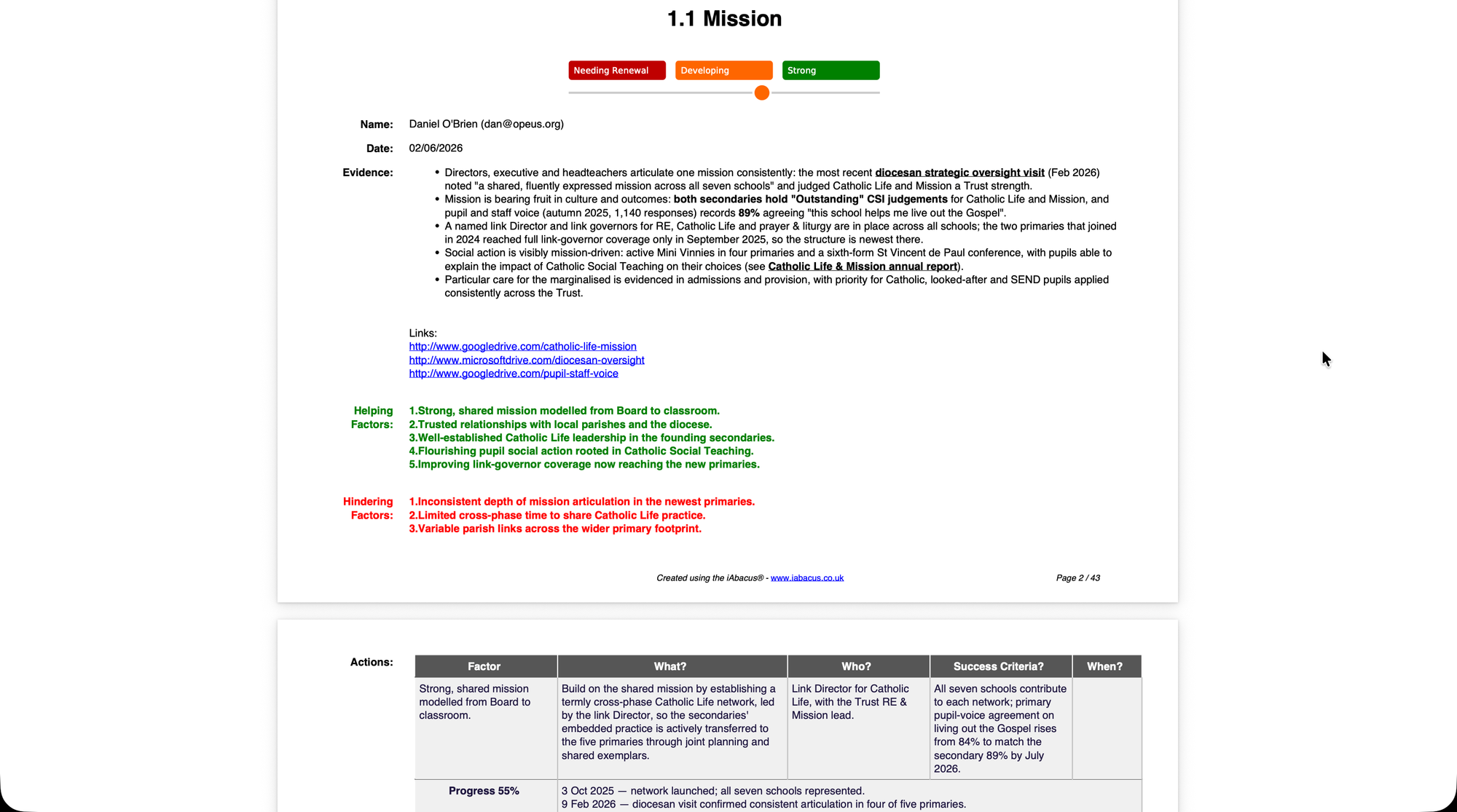
Making it this straightforward isn't about saving effort for its own sake. It's that the framework's intent comes alive in the everyday work of leading — in real conversations, with the criteria in view. And when it's this clear, it produces a proper record almost as a by-product — one you can share with trustees, the diocese, or an inspector, exported at the click of a button.
And it scales to the whole trust
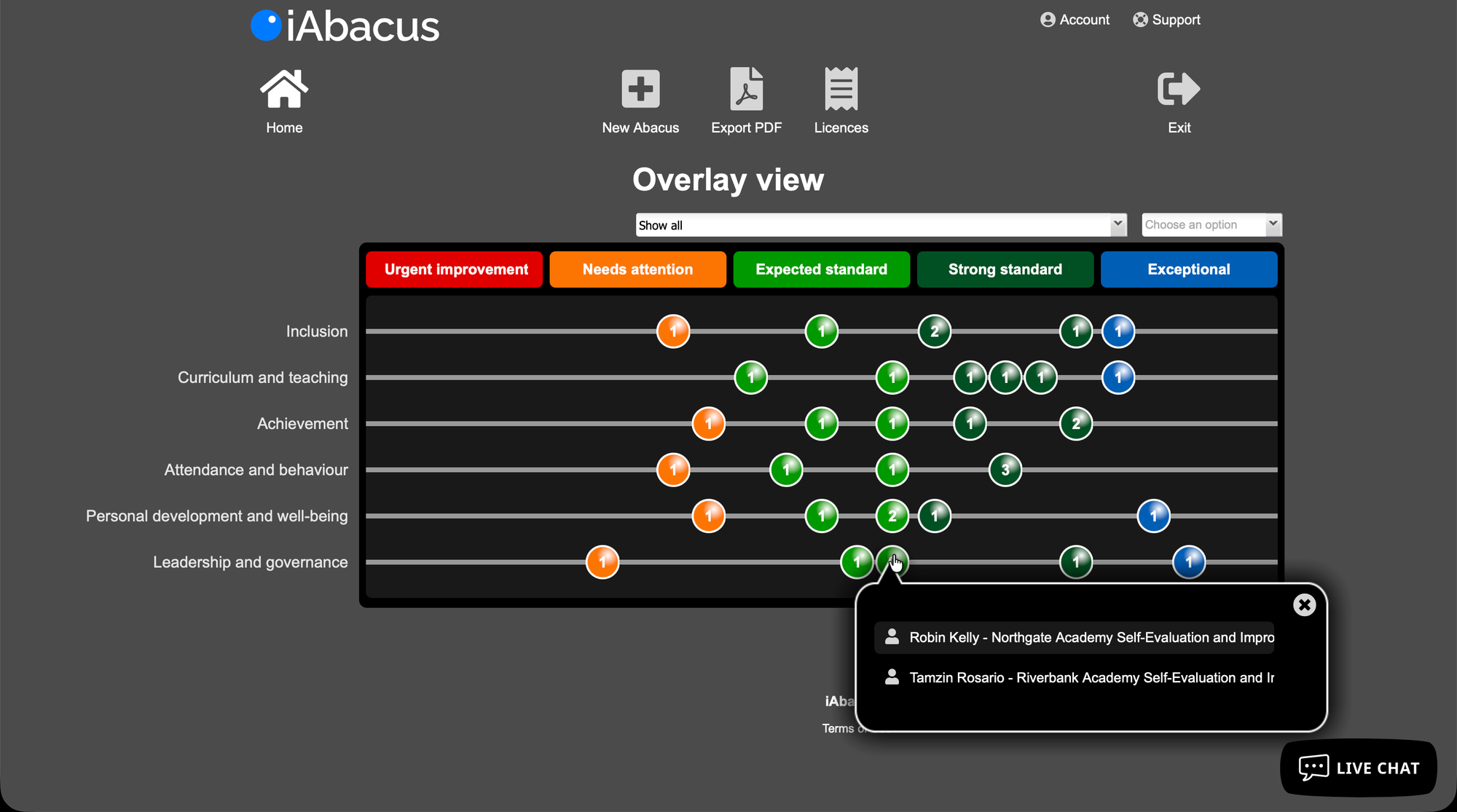
This is where simplicity does something complexity never can. When every school works through the same straightforward process, those individual judgements overlay into a single trust-wide view. A CEO can see strengths and priorities across every school at a glance — then click into any bead and find the evidence and the thinking behind it. The richness is all still there. It's just no longer in the way.
Worth returning to
A framework this thoughtful deserves to be part of the everyday rhythm of leading a trust — not an annual exercise, but a conversation you keep coming back to. That's all iAbacus is really for: making it easy to return to, often, and act on what you find.
Here's a short walkthrough if you'd like to see it in practice: watch the walkthrough.
If you'd like to talk it through, I'd be glad to show you and your team how it works. You're welcome to book a short Teams meeting with me at a time that suits you: www.opeus.com/daniel.


