


When most people hear the word dashboard, they think of data. Occupancy figures. Staff ratios. Tracker scores. Numbers flowing in from multiple systems, aggregated into an overview that tells you, at a glance, how things look.
Nursery groups already have plenty of dashboards like that. Management information systems, attendance trackers, online observation tools, finance systems — all producing numbers, all showing what happened yesterday, last week, last month.
The iAbacus Nursery Group Dashboard is not that. And that distinction matters more than it might seem.
What data can and cannot tell you
Data is valuable. Nobody is arguing otherwise. Occupancy figures, retention rates, parent review scores — these things tell you something real about what is happening in a setting.
But data tells you what happened. It does not tell you why. It does not tell you what the manager thinks is driving that pattern, what they have identified as the barriers to improvement, or what specific actions they are taking in response. It does not tell you whether the setting's curriculum is ambitious and well sequenced, or whether inclusion practice is genuinely working for the children who need it most. It does not capture the professional judgement of the people who work in the nursery every day.
A data dashboard gives you numbers. What you need, as a group leader, is understanding.
iAbacus is built on professional judgement — backed by 50 years of research.
iAbacus was not designed as a data tool. It was designed — over five decades of research and practice in leadership, evaluation, and educational improvement — to structure and amplify the professional judgement of the people closest to the work.
The process begins with that judgement. A manager and their leadership team evaluate their setting honestly, across each of the six Ofsted evaluation areas, sliding a bead to indicate where they believe their setting currently stands. That initial judgement is then checked against the criteria in the Ofsted Early Years Inspection Toolkit. Evidence is attached — documents, observations, parent feedback — to support and validate the position. And then comes the step that separates iAbacus from any data system: the force-field analysis. What is helping this setting perform at the level it does? What is hindering it from going further? And what specific actions will address those factors?
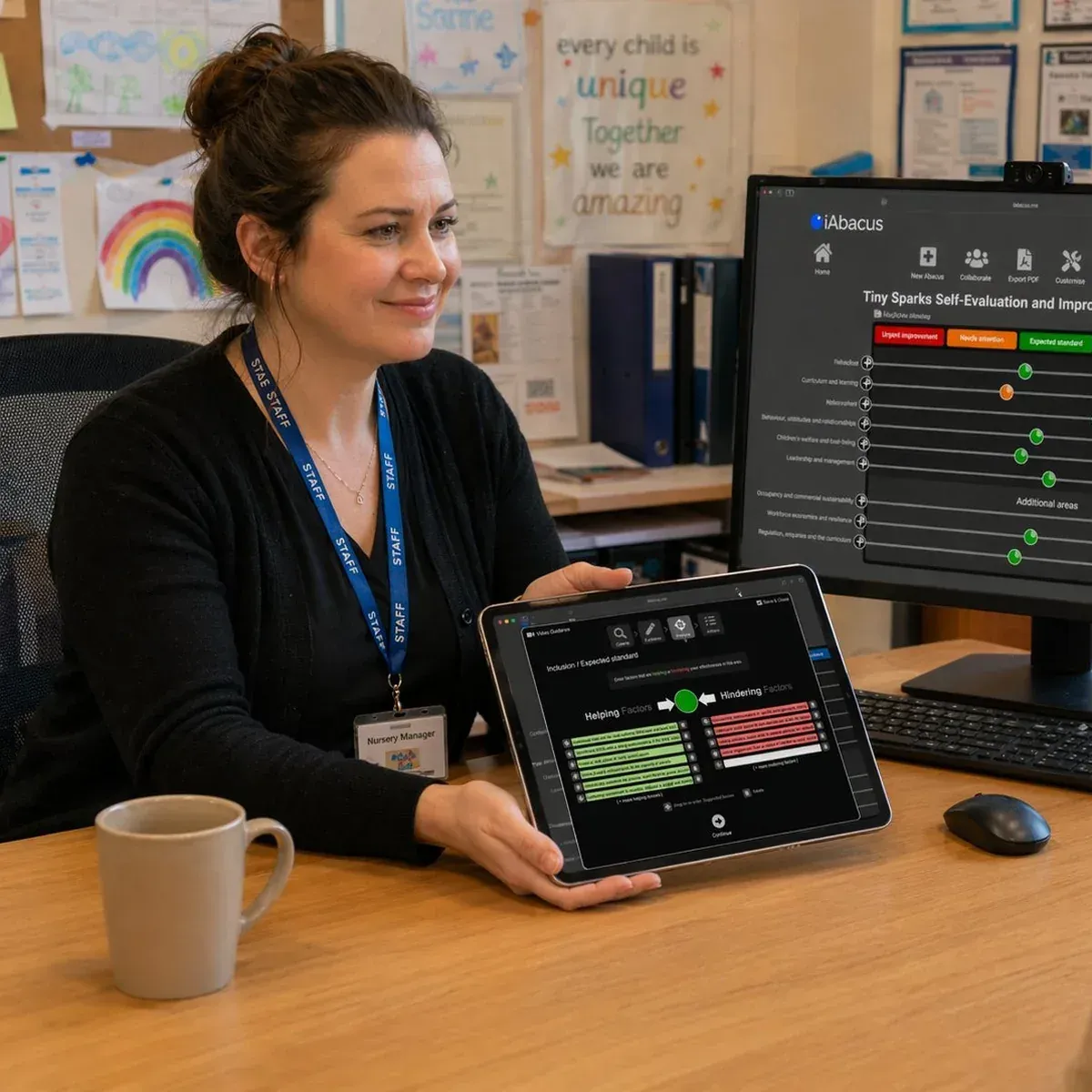
The result is not a data point. It is a professional evaluation — honest, evidence-backed, and rooted in the genuine understanding of the people who know the setting best. And it comes with an action plan.
The same process for everything that matters
The Nursery Group Dashboard does not stop at the Ofsted areas. Your group can add the commercial and operational priorities that matter to you — occupancy, staff retention, parent reputation, whatever sits at the top of your own list. And here is the important part: those areas are evaluated the same way.
Your occupancy number tells you what happened last month. A manager's iAbacus evaluation of "occupancy and enrolment" tells you why — what is helping, what is hindering, what specific actions the setting is taking, and what support they need. Data tells you there is a problem. iAbacus tells you what is being done about it, from the person best placed to know.
That is the difference. And it applies to every area on the dashboard, Ofsted or otherwise.
What this means for your dashboard
When those individual evaluations combine into your group-wide Nursery Group Dashboard, what you are looking at is not aggregated data. It is the collective professional judgement of every manager in your group — each one backed by evidence, each one supported by an analysis of helping and hindering factors, each one connected to a specific improvement plan.
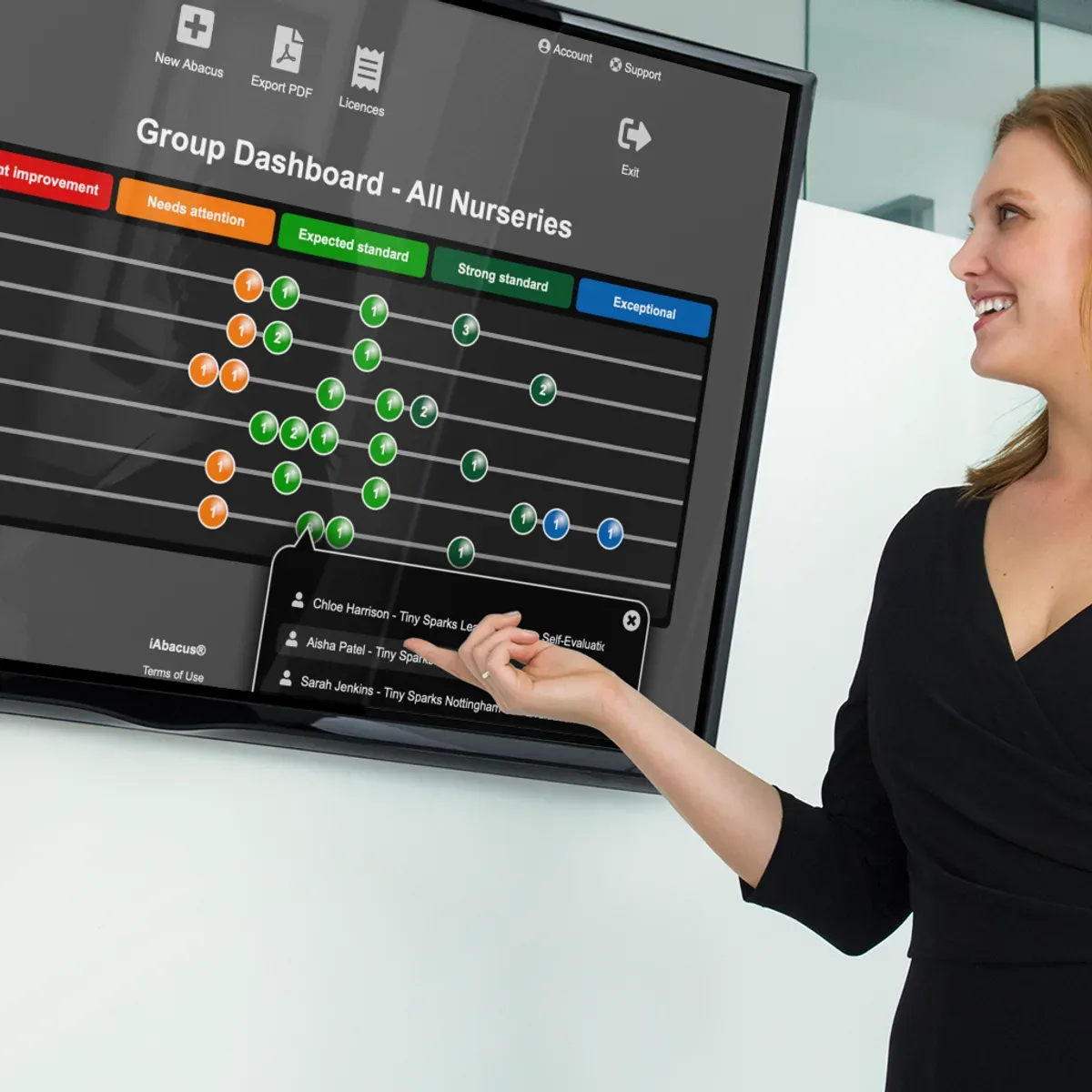
Click on any setting in any evaluation area and you do not see a number. You see a story. You see what the leadership team believes about their setting, why they believe it, what is driving their performance, and what they are doing about it.
That is the difference between a data dashboard and an insight dashboard. Data tells you what. iAbacus tells you why — and what is being done about it.
Why this matters for improvement
The research behind iAbacus is clear on this point. Genuine, lasting improvement does not come from monitoring metrics. It comes from the people closest to the work making honest, evidence-based judgements about where they are, understanding the factors that are helping and hindering their progress, and taking focused, specific action in response.
That is a deeply human process. It requires professional knowledge, contextual understanding, and the kind of nuanced insight that no automated system can replicate. Data can support that process. It cannot replace it.
iAbacus is built on this conviction — that empowering the professional judgement of managers and their teams is the most powerful thing a group can do. The dashboard is the result of that empowerment, not a substitute for it.
Find out more
See the iAbacus Nursery Group Dashboard in action at ngd.iabacus.com
Tags: #NurseryImprovement #NurseryGroup #iAbacus #NurseryGroupDashboard #ProfessionalJudgement #EarlyYearsData #GroupLeadership #OfstedEarlyYears


