


Ask most group leaders how their settings are doing and they will give you a confident answer. They have visited. They have spoken to managers. They have seen the occupancy figures.
But ask them to describe, with precision and evidence, how every setting in the group is performing right now — across the quality of the provision and the commercial and operational realities that sit alongside it — and the answer becomes less certain.
Not because they are not paying attention. But because the insight they need doesn't exist in one place.
The picture most group leaders are actually working from
Conversations give you one perspective. Occupancy reports tell you what happened, not why. Self-evaluations and improvement plans exist in different formats, different frameworks, different degrees of rigour — some current, some months old, some written for an audience rather than for genuine improvement.
And that is only the Ofsted side. The commercial picture — retention, agency spend, parent reviews, funded hours viability, waiting lists — lives somewhere else entirely. Spreadsheets. Email threads. The head of an area manager who has been meaning to write it up.
You cannot compare what is not consistent. You cannot build a coherent group-wide picture from fragments that were never designed to fit together. Two sets of information, both partial, neither connected.
And with Ofsted now grading every setting across six evaluation areas plus safeguarding, the cost of those blind spots is higher than it has ever been.
What genuine group-wide insight actually looks like
There is a difference between knowing your group and truly knowing every setting within it.
Truly knowing means being able to look at a single, coherent view of every nursery — same framework, same language, same criteria — and knowing that what you are looking at reflects honest, evidence-backed professional judgements made by the people who know those settings best. And being able to click into any setting, any evaluation area, and see not just a position but the full picture behind it. The evidence. The factors helping and hindering. The actions being taken.
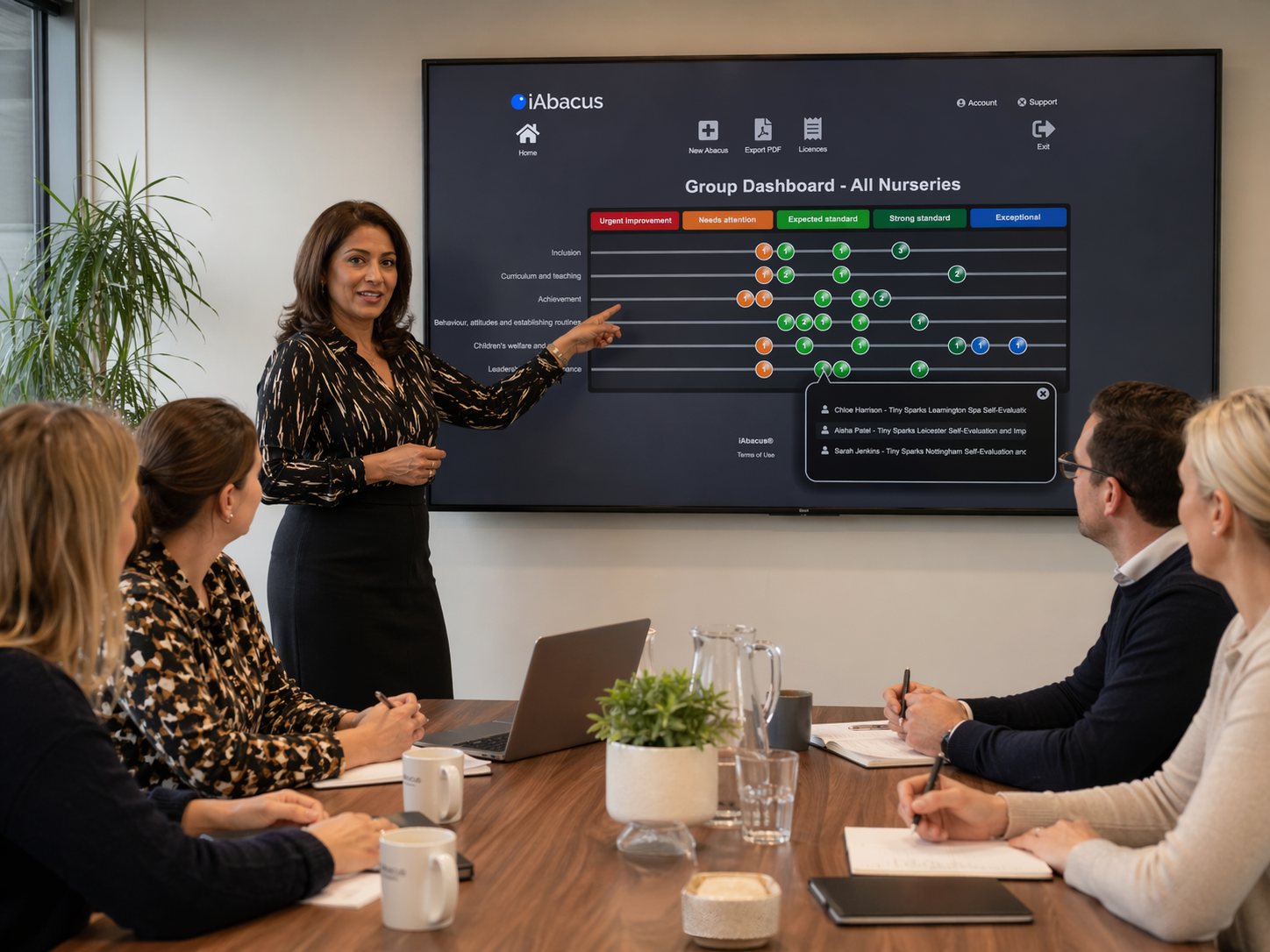
And crucially, it means seeing the Ofsted view and the group view side by side. Provision quality alongside the commercial and operational priorities your group actually runs on.
That is not a summary. That is genuine, real-time, group-wide intelligence.
The insight already exists. The problem is bringing it together.
Every manager in your group knows their setting. That knowledge is real. The problem is that it is not being captured consistently — and so it stays scattered, invisible to the people who could use it most.
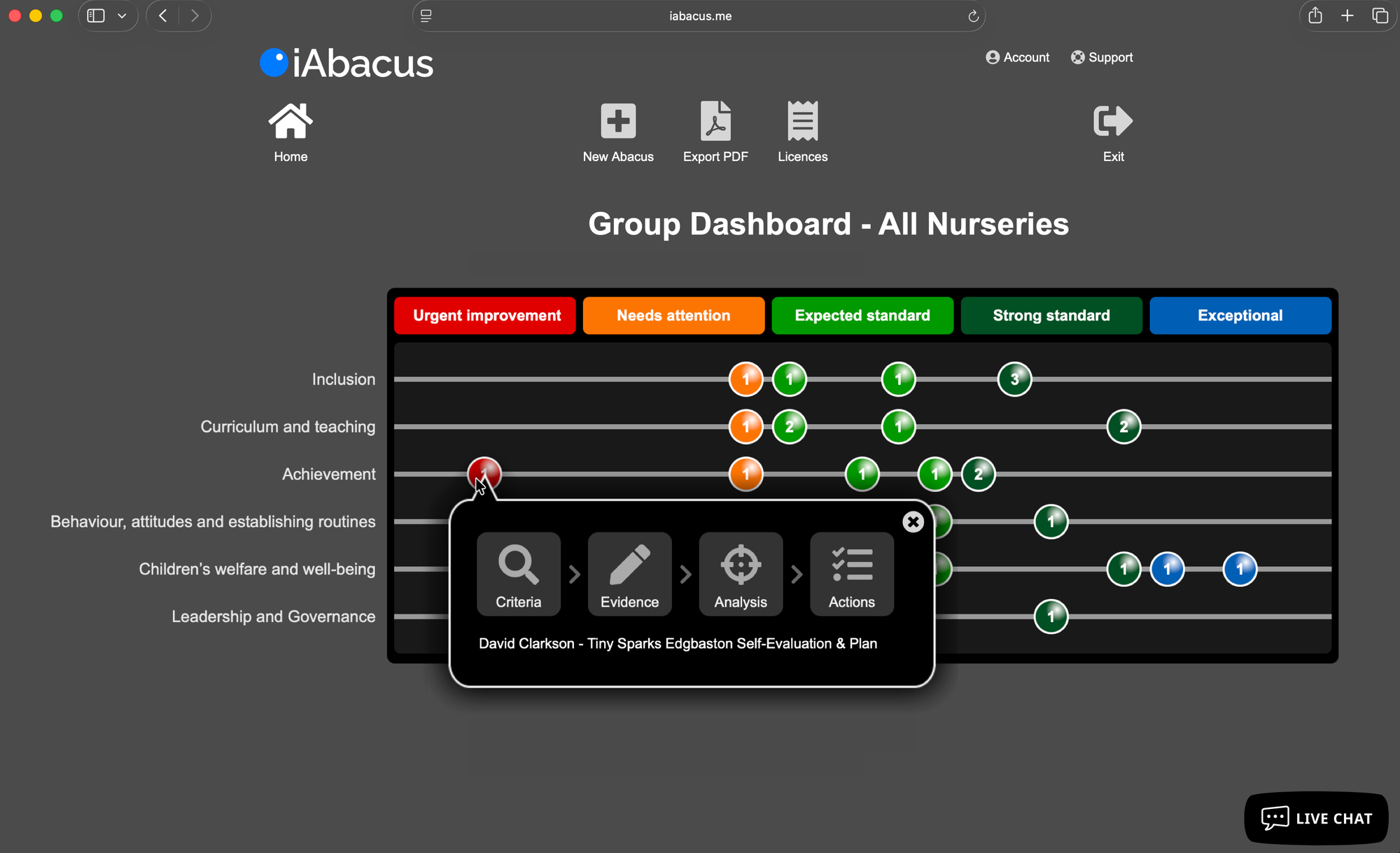
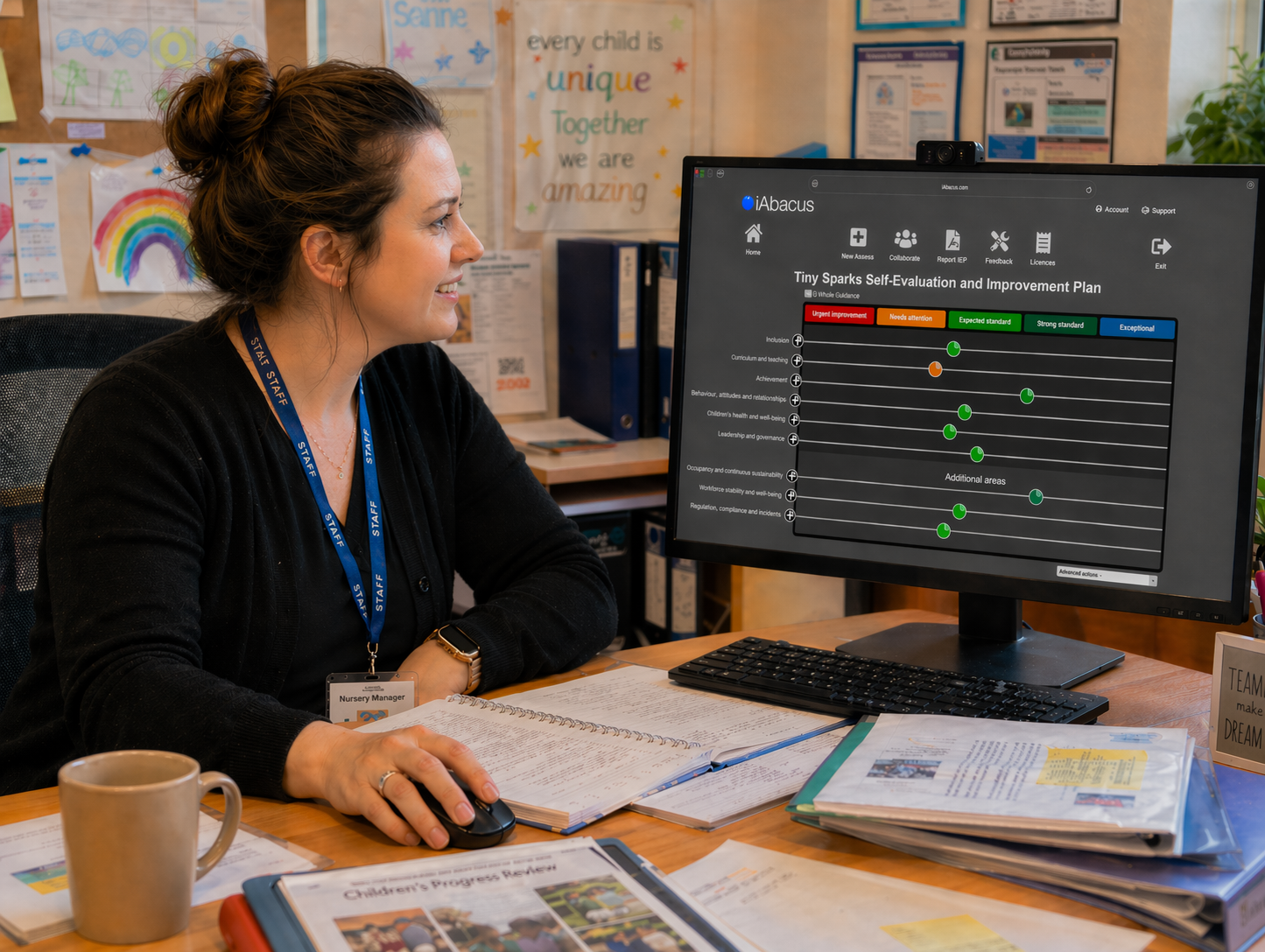
The iAbacus Nursery Group Dashboard solves this. Every setting in your group completes a genuine self-evaluation and improvement plan — aligned to the new Ofsted Early Years Inspection Toolkit, using the same six evaluation areas and the same five-point scale that an inspector will use. And extended to cover the commercial and operational areas your group cares about — occupancy, retention, parent reputation, whatever matters to you. As each setting works through that process, your group dashboard builds itself. One coherent, live, panoramic view of every nursery.
And crucially — managers do this for themselves. They gain a living self-evaluation and improvement plan that is genuinely useful for their setting. You gain the group-wide picture as the natural result. Two wins. One process. No extra work from anyone.
Ready to see your group clearly?
Find out more and book a demo at ngd.iabacus.com
Tags: #NurseryGroup #EarlyYears #NurseryLeadership #OfstedEarlyYears #NurseryGroupDashboard #iAbacus #EYFS #QualityAssurance


