


If you’re a headteacher, trust leader or governor right now, you’ve probably got one question quietly nagging away in the background:
“What do we actually need to change in our SEF and improvement plan for the new Ofsted framework – and how on earth do we do it without drowning everyone in more paperwork?”
This blog is my attempt to give you a calm, practical answer – and to show how iAbacus can make that whole job much simpler.
And if you’d rather see it than read about it, I’ve recorded a live, unedited training session for headteachers on YouTube, where I walk through the process step-by-step using the new Ofsted toolkit with real school leaders – no script, no polish, just the approach in action.
You can watch it here: https://www.youtube.com/watch?v=iVl6XMHDVaM
What’s really changed with the new Ofsted framework?
Two documents matter most:
- the School inspection operating guide for inspectors, and
- the State-funded school inspection toolkit.
Together, they shift the emphasis in a few important ways.
1. From boxes and spreadsheets to professional dialogue
The operating guide is very explicit that inspection is now built around constructive, professional dialogue between inspectors and leaders – underpinned by “professional curiosity and compassion”.
Inspectors are expected to use the toolkit with you, not against you, to:
- celebrate strengths
- validate your priorities and progress
- highlight where improvement is needed.
So whatever SEF/SIP format you use, it has to help your team think, not just record.
2. A sharper focus on pupils who achieve, belong and thrive
One of the key principles in the operating guide is that inspection activity should build a picture of the extent to which pupils:
- achieve – academically and personally
- belong – feel part of, and valued by, the school community
- thrive – are kept safe and able to flourish, whatever their background or needs.
Your self-evaluation and improvement planning now need to tell that story clearly.
3. The toolkit is the framework – and it’s also meant for you
The new inspection toolkit sets out the evaluation areas inspectors will use: safeguarding, inclusion, curriculum and teaching, achievement, attendance and behaviour, personal development and well-being, early years, post-16 and leadership and governance.
Crucially, the toolkit also says it:
“can also be used by leaders to support self-evaluation and continuous improvement.”
In other words: Ofsted is inviting you to use their structure as your SEF/SIP spine.
4. “Please don’t write documents just for us”
You may have missed this line, but it’s important.
The toolkit is very clear that inspectors only need to see:
- documents linked to statutory requirements, or
- documents you already produce as part of normal school business.
They do not expect leaders to produce new documents in a special format just for inspection – that would be “unnecessary workload”.
So the challenge is this:
How do we align tightly with the toolkit without inventing a whole new cottage industry of paperwork?
That’s where iAbacus comes in.
Why iAbacus is the simplest way to realign your SEF & SIP
iAbacus was built for exactly this situation: a clear, visual way to evaluate and plan improvement in one place, against whatever framework you choose.
Here’s how it helps you line everything up with the new Ofsted toolkit – calmly and efficiently.
1. Start with a ready-made Ofsted toolkit template
Within iAbacus you can choose a template that mirrors the new Ofsted evaluation areas:
- Safeguarding
- Inclusion
- Curriculum and teaching
- Achievement
- Attendance and behaviour
- Personal development and well-being
- Early years / Post-16 (where relevant)
- Leadership and governance.
Those become the “rows” of your abacus. Across the top, you have levels of performance. You simply slide a bead to show where you believe your school currently sits in each area.
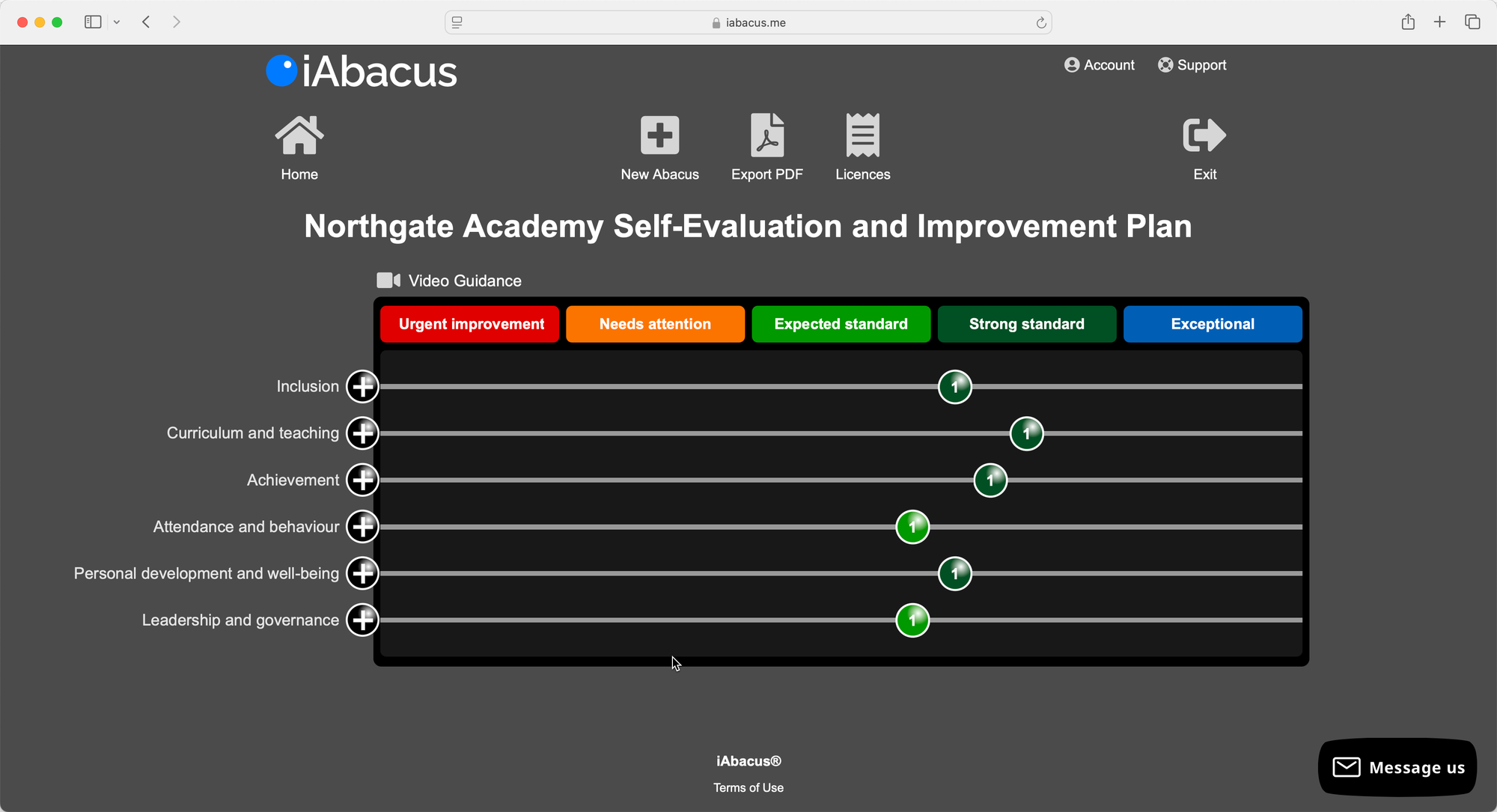
No wrestling with new Word formats, no re-invented RAG grids. You’re using the same language and structure inspectors will use – but in a form that belongs to you.
2. Capture professional judgement first – data second
The new framework expects inspectors to listen to your view of your school and then explore the evidence together. The iAbacus process is built on the same principle.
Each abacus starts with a simple question:
“How well are we doing here?”
You (and your team) make a judgement by moving the bead, then check that judgement against clear criteria aligned with the toolkit.
Only then do you add evidence – briefly, in one place:
- headline data
- key pupil or parent voice
- brief notes from work scrutiny, lesson visits or external reviews
- links or attachments where needed.
You’re not duplicating everything; you’re signposting the evidence you already hold. That makes conversations with inspectors much easier:
- “Here’s our judgement for safeguarding; here are the headlines behind it; here’s what we’re doing next.”
If you watch the YouTube session, you’ll see this in real time: heads sharing their professional view, then using iAbacus to anchor that in the Ofsted descriptors and live evidence.
3. Bridge the gap between SEF and SIP in one screen
One of the frustrations I hear most from headteachers is this:
“Our SEF and SIP don’t really talk to each other. We evaluate in one place, then plan in another – and the golden thread is always at risk of snapping.”
In iAbacus, evaluation and planning sit side by side.
For each area, once you’ve made your judgement and added evidence, the next step is to analyse:
- Helping factors – what’s pushing us towards “achieve, belong, thrive”?
- Hindering factors – what’s holding us back?
This “helping and hindering” analysis is the heart of the model and draws on well-established force-field analysis and improvement research.
From there, iAbacus leads you straight into an action plan:
- concrete actions
- who is responsible
- timescales
- success criteria.
Because it’s all on the same abacus, the link between SEF and SIP is crystal clear – for staff, governors and inspectors.
4. Turn multiple voices into one clear picture
The operating guide stresses that inspectors will build a “clear and typical picture of all aspects of the school’s work”, drawing on conversations with leaders, staff, pupils and parents.
This is much easier to show if your own SEF process is already collaborative.
With iAbacus you can:
- invite SLT, subject leaders, SENCOs and governors to contribute their own beads and notes
- overlay different abacuses to see patterns across teams, subjects or schools in a MAT
- stack abacuses to compare, for example, how different middle leaders view inclusion or curriculum quality.
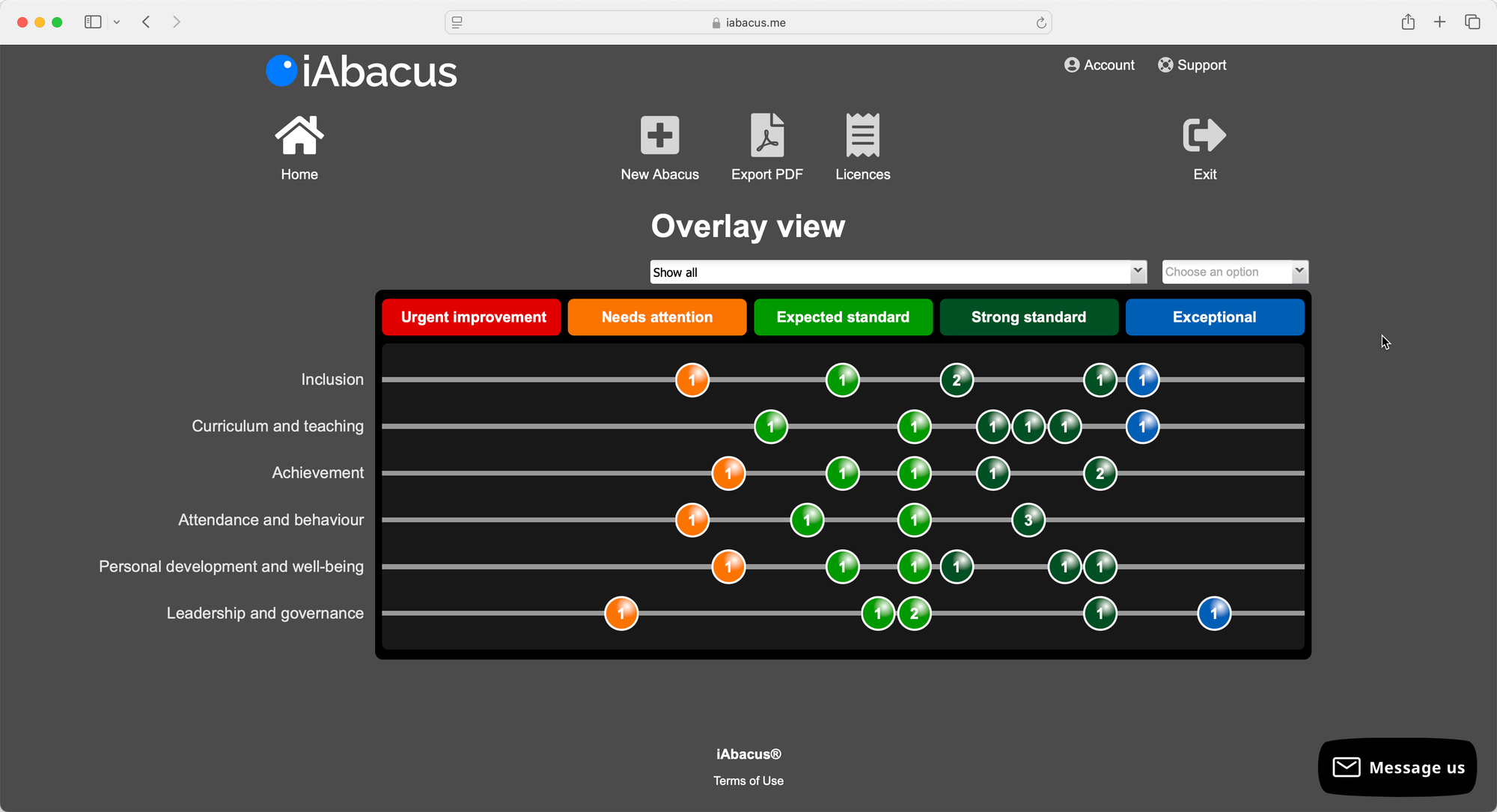
You end up with one shared view, enriched by multiple perspectives – exactly the kind of internal quality assurance Ofsted expects to see, but again, created first and foremost for your improvement work.
5. Produce one coherent document – not a new “Ofsted set”
Because the inspection toolkit insists that inspectors don’t need information in any specific format, and don’t expect documents created solely for them, you are free to make one high-quality improvement document and use it for everything.
In iAbacus, that’s as simple as:
- choosing which areas you want to include
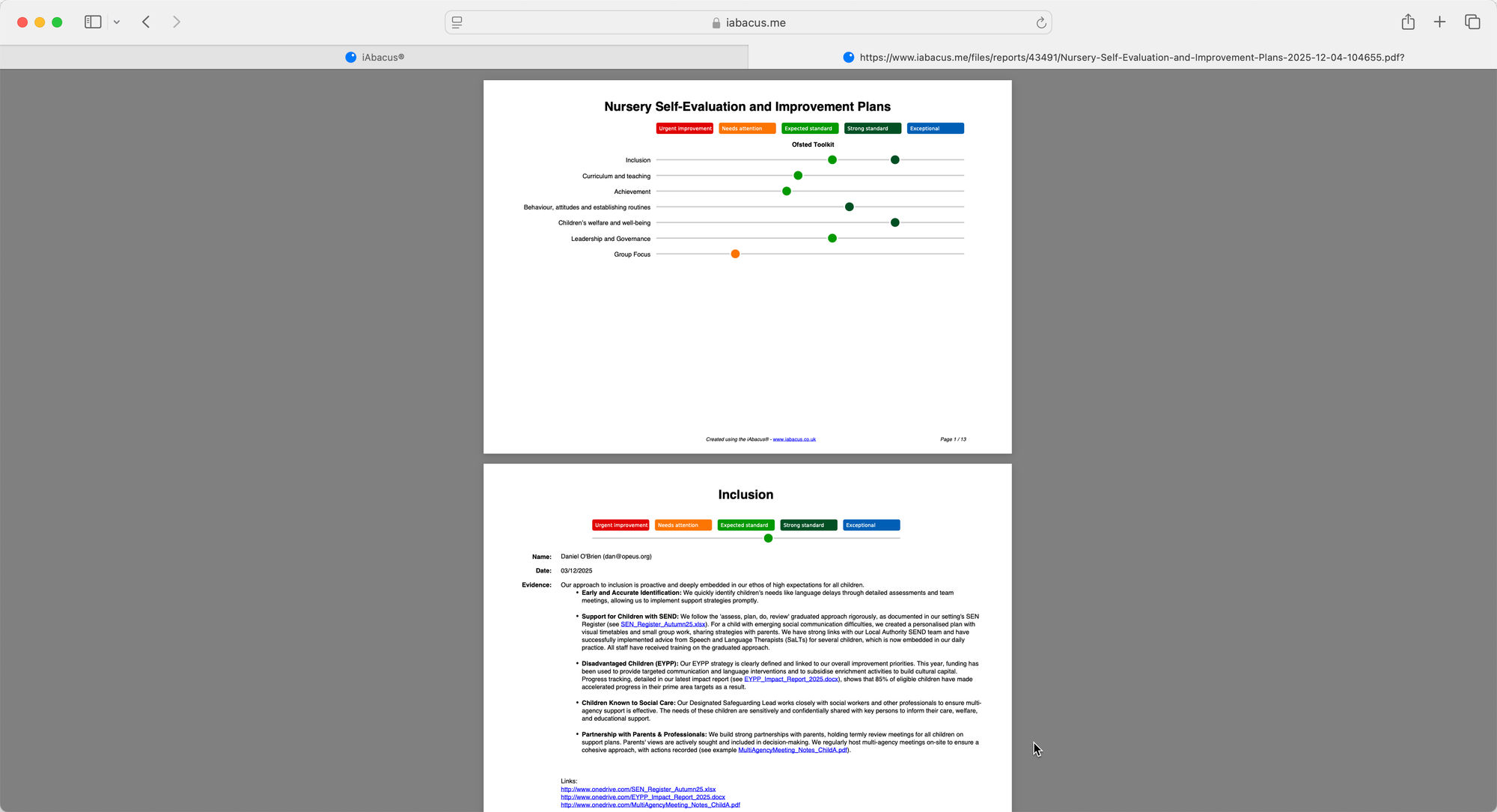
- deciding how much detail to show (evidence only, actions only, or the full journey)
- exporting a polished PDF in one click.
You can then:
- share a summary version with governors
- keep a more detailed working version for SLT
- provide a concise overview for inspectors as part of your normal SEF/SIP paperwork.
Same process. Same tool. Different audiences, without extra work.
6. A living record, not a one-off exercise
The new toolkit is designed to support continuous improvement, not a one-off judgement.
iAbacus reflects that. Each time you revisit an area:
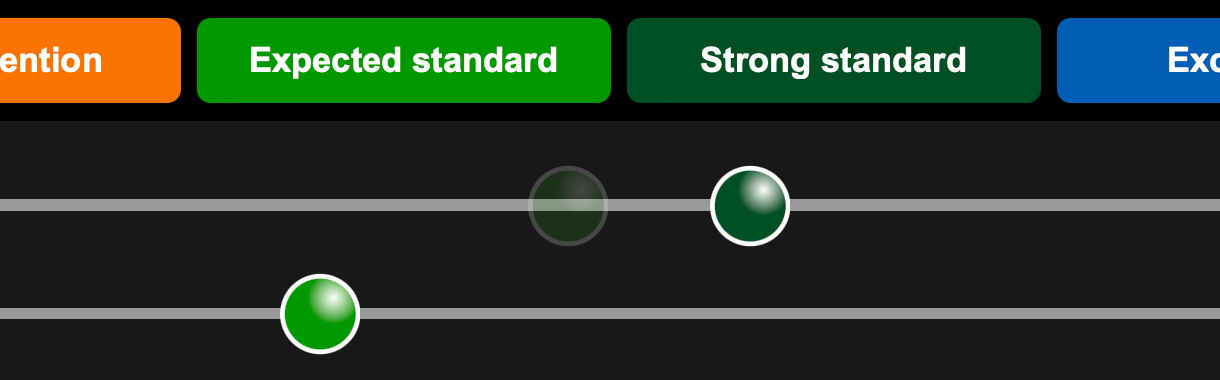
- you slide a new bead to show your latest judgement
- the old bead fades, but stays visible
- your evidence, helping/hindering analysis and action plan all update.
Over time, you build a visual history of your school’s improvement journey – a powerful way to demonstrate impact to governors, trustees and inspectors, but also a motivational tool for your staff: “Look how far we’ve come.”
Again, if you watch the YouTube training, you’ll see exactly how this looks and feels in a real planning conversation – including how leaders use previous beads to talk confidently about “distance travelled”.
What this means in practice for your school
Over the next term or two, most schools will be:
- re-mapping their SEF to the new Ofsted evaluation areas
- checking that their improvement plans clearly reflect achieve, belong, thrive
- trying very hard not to create another parallel system on top of everything else.
If you choose to use iAbacus as your SEF/SIP home, you can:
- Pick an Ofsted-aligned template and tweak the language to match your context.
- Work with SLT and key middle leaders to make initial judgements and capture headline evidence.
- Use the helping/hindering analysis to sharpen priorities and ensure your SIP actions are focused on the right levers.
- Share overlay/stack views with governors or MAT leaders to support strategic discussion across the school or trust.
- Export reports when you need them – for inspection, governor meetings, trust reviews or internal QA – knowing they all flow from the same single source of truth.
You end up with one simple, visual process serving three purposes:
- authentic professional reflection
- sharply focused improvement planning
- effortless alignment with the new Ofsted framework.
If you’d like to see all of that done “live”, in real time with real school leaders, the full, unfiltered training recording is here: https://www.youtube.com/watch?v=iVl6XMHDVaM
A final reassurance
I know that every new framework or toolkit can feel like “one more thing”. My aim with iAbacus has always been the opposite: to give you one fewer thing to worry about.
If you’d find it helpful, I’m always happy to walk through your current SEF/SIP with you and sketch how it would look in iAbacus, or to set up a template that mirrors your exact wording and priorities. The choice, as ever, is entirely yours.
You can book a free, no-obligation 20-minute meeting with me here.


