


The moment the Ofsted notification call lands, even the most confident headteachers feel that familiar jolt of adrenaline.
A hundred questions rush in at once.
What will inspectors want?
Will we cover everything?
Is our evidence accessible?
How do I keep the team calm?
From November 2025, the new inspection framework places even greater emphasis on open professional dialogue, leaders’ confidence, and the ability to articulate your school’s real strengths and priorities. And nowhere is that more evident than in the new Ofsted planning call.
This isn’t a box-ticking exercise. It’s the tone-setter for the entire inspection.
Done well, it moves a leader from panic to poise.
Done poorly, it can create confusion, misplaced priorities, and unnecessary stress.
Here’s how to approach the planning call with clarity, confidence, and calm—and how iAbacus helps you get there.
Why the New Planning Call Matters More Than Ever
The 2025 operating guide makes the purpose of the call crystal clear. Inspectors use it to gain a top-level view of the school, its context, and leaders’ views about strengths and priorities for improvement. It usually lasts up to 90 minutes and is expected to take place on the same day as the notification call.
Crucially, the call is a professional conversation, not an interrogation. Inspectors are instructed to conduct it with courtesy, empathy, and respect, and to check on leaders’ well-being at the start. Leaders are encouraged to take breaks and include additional senior staff to support them.
But the call still requires precision. Leaders must explain their school’s story clearly: what’s going well, what they’re working on, and how they know.
This is where many headteachers feel the pressure.
The Four Areas Leaders Must Be Ready to Discuss
The new guidance places particular focus on four leadership responsibilities that shape the inspection narrative:
1. Leadership and Governance
Inspectors explore whether leaders have a clear grasp of strengths, priorities, and impact. They also check that governance arrangements are understood and effective.
2. Safeguarding
Inspections begin with safeguarding. Inspectors want evidence of an open culture where concerns are raised easily and responded to promptly, and where pupils feel safe.
3. Inclusion
Inspectors want clarity on how leaders understand the needs of disadvantaged pupils and those with SEND, and how early identification, effective support, and high expectations are embedded in the school.
4. Strategic Priorities and Continuous Improvement
Leaders must articulate why priorities were chosen, what actions are underway, and what impact is being seen.
All of this needs to be shared succinctly and confidently.
Why So Many Schools Feel Unprepared
Headteachers consistently report three pinch points during the planning call:
1. Evidence is scattered across too many systems
Inspectors don’t want piles of documents—they want clarity. But many schools have SEFs, SIPs, safeguarding data, and curriculum information spread across multiple places.
2. The SEF doesn’t reflect the real picture
Some SEFs feel like compliance documents rather than meaningful evaluations. Leaders struggle to recall the rationale behind judgments or link them to clear evidence.
3. Improvement plans aren’t joined up
The 2025 framework expects coherence—improvement plans aligned from boardroom to classroom, with clear helping and hindering factors driving the next steps.
That level of clarity can be difficult to articulate under pressure.
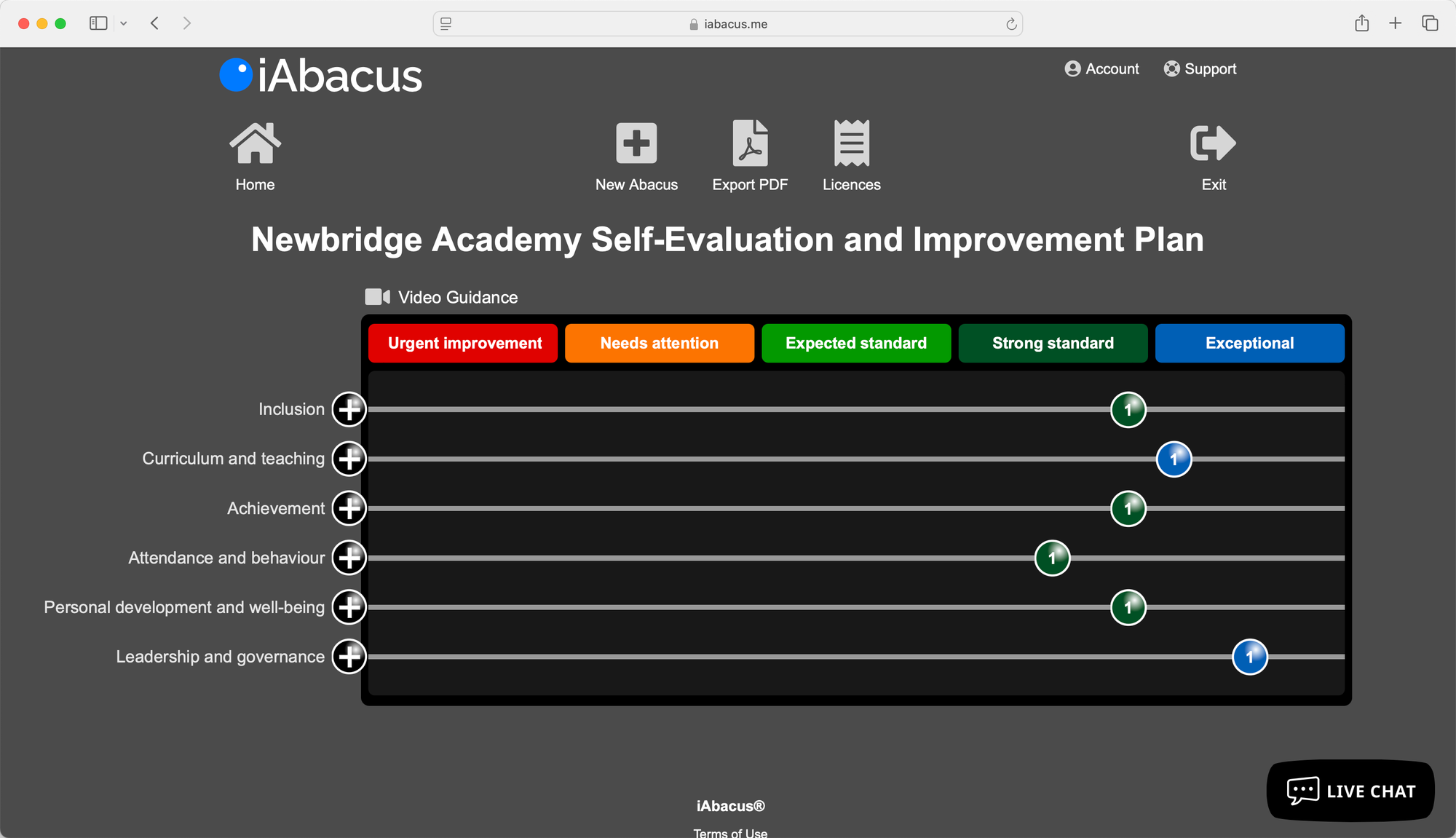
How iAbacus Turns Planning Call Panic into Professional Poise
iAbacus was built for this exact moment. With a single login, leaders can bring all their evaluation and planning into one coherent narrative.
A clear, live SEF built through structured professional judgement
iAbacus starts with your insight—not a checklist. Leaders place their judgment visually, verify it against the relevant criteria, and attach evidence. Nothing is hidden, lost, or duplicated.
A joined-up improvement plan linked directly to evaluation
Because action planning grows directly from the helping/hindering analysis, leaders always know why each action exists, what it addresses, who is responsible, and how progress is monitored.
Instant, inspector-ready reports
iAbacus generates clean, visual, accessible PDFs in a single click—ideal for walking through your school’s priorities during the planning call without hunting for documents.
A panoramic, school-wide view
Overlay and Stack views allow leaders to combine multiple evaluations—subjects, phases, SEND, safeguarding, pastoral—and produce a coherent, accurate picture of the school.
A calmer inspection experience
When everything is consistent, up to date, and easy to navigate, leaders enter the planning call with genuine confidence.
How to Use the New Ofsted Framework & Toolkit for Your SEF and SIP with iAbacus
A Suggested Script: What ‘Poise’ Sounds Like in the Planning Call
Here’s the type of narrative iAbacus helps leaders deliver:
“Our self-evaluation is live and regularly updated by leaders across the school. Our main strengths this year are curriculum consistency and behaviour culture. Our key priority is personal development and well-being, where we’ve identified specific helping and hindering factors through our recent analysis. We can walk you through the evidence, our analysis, and the actions we’re taking. Everything sits in one place, so we can show how each action links directly to our areas of need.”
This is exactly the transparent, evidence-informed picture inspectors expect.
Three Ways to Prepare for Your Next Planning Call (Without Adding Workload)
1. Align your SEF and SIP using iAbacus templates
iAbacus includes templates aligned with national frameworks, including the November 2025 Ofsted criteria.
2. Share the workload
Middle leaders, SENCOs, governors, and pastoral leads can contribute directly to their areas, strengthening the narrative.
3. Keep a single, evolving story
iAbacus creates a living record of your journey. Each evaluation builds on the last. Each plan reflects genuine priorities. Each update strengthens your confidence.
The Result? A Planning Call That Works For You, Not Against You
When your evidence, rationale, and priorities are joined up, the planning call becomes an opportunity—not a threat.
You present your school with confidence.
Inspectors gain clarity.
Your team feels reassured and prepared.
You shift the inspection experience from compliance… to leadership.
Ready to Bring Calm and Clarity to Your Next Inspection?
iAbacus gives leaders the structured process, visual clarity, and confidence the 2025 Ofsted model demands—without increasing workload.
Bring poise, clarity, and confidence to your next inspection journey.


