


Every so often you read something that doesn’t try to impress you. It just rings true.
That’s how I felt reading Paul K. Ainsworth’s recent reflections on school improvement. Paul, known to many as the 'No Silver Bullets Man', writes from a place of deep experience across diverse settings. His message is one that many UK leaders already know in their gut, but don’t always have the time or space to protect:
Real improvement is rarely dramatic. It is about taking the professional wisdom you already have and turning it into a living discipline.
Paul’s “no silver bullets” stance isn’t pessimism; it’s professional respect. It acknowledges that schools are complex, the work is relational, and lasting change takes time. You can read his full range of insights on his blog: Day in, day out, school improvement.
At iAbacus, I recognise his message because it is essentially the design brief we’ve always worked to: not “here’s the answer”, but “here’s a way to keep doing the right things, consistently, without drowning in paperwork.”
Instead of just restating Paul’s reflections, I want to show what it looks like when you try to live this philosophy in real schools, and where a simple system can help leaders sustain those behaviours under pressure.
What “No Silver Bullets” Really Means in Practice
Paul is clear about the trap: school improvement isn’t “lift and shift”—taking what worked in one school and dropping it into another—and it certainly isn’t discovering one shiny initiative and expecting it to do the heavy lifting.
Throughout his reflections, Paul touches on several key themes that resonate deeply with our own approach to turning wisdom into action:
- There is good everywhere, even in the most challenged settings. We must find it first.
- Confidence is a lever, because teams do better work when their professional judgement is strengthened, not undermined.
- Context is a lens, so the right action depends on this school, at this moment.
The challenge is that these behaviours are difficult to sustain when the 'system' is essentially a series of static reporting snapshots rather than a living, breathing process. It is hard to stay focused on relational, human-led change when you are constantly fighting the friction between evaluation and action—becoming exhausted by the admin of school improvement rather than energised by the impact of the work itself.
That’s where a tool should earn its keep.
The Real Synergy: iAbacus as a Discipline, Not a “Solution”
The iAbacus is a visual school improvement engine. It’s built around a simple sequence that moves evaluation away from spreadsheets and back into professional dialogue. It takes that "insider wisdom" and provides the discipline required to make it stick:
- How well are we doing?
- What makes us say that?
- What’s helping and what’s getting in the way?
- So, what will we do next?
That sequence maps closely to Paul’s thinking because both are anchored in the same premise: Clarity first, action second, review always. Here are the three strongest points of synergy.
1. Confidence-First Evaluation: Protecting Professional Wisdom
Paul’s first move is deceptively powerful: look for the good. Improvement begins when professional judgement is trusted and sharpened, rather than overwritten by fear or external data sets.
The iAbacus Synergy: Our process begins with the team “sliding the bead” on a visual abacus to show where they believe they are—before prompting them to anchor that judgement with evidence. This ordering matters. It allows leaders to lead with their wisdom. It shifts self-evaluation from "the data says we are failing" to "here is what we think is true—now let's test it and agree what it means."
2. The Diagnostic Gap: Creating a Living Context
Paul warns against the temptation to import "shiny" borrowed plans. He suggests we must understand if we are “polishing” or “rebuilding the engine” before we act.
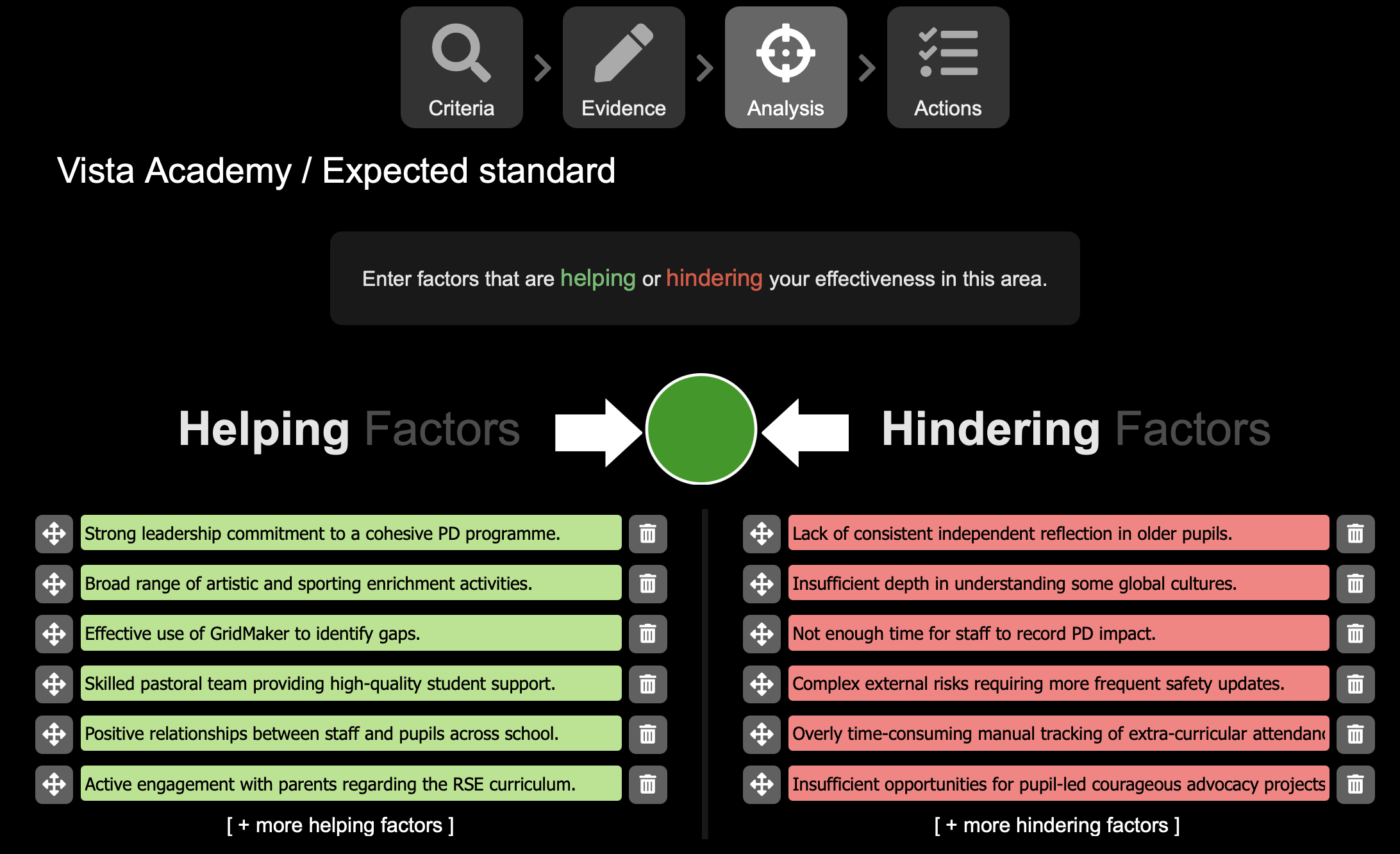
The iAbacus Synergy: We create a deliberate, disciplined pause between evaluation and planning using Helping and Hindering Factors (Force-Field Analysis). This is the "engine room" of the tool. It prevents the "leap" to generic actions because actions in iAbacus must respond to the specific barriers you've identified in your unique context. It helps you build a plan that fits your reality, not a template from another school.
3. The Long Game: Making “Distance Travelled” Visible
Paul’s point about "never shortcutting the CPD" is vital. If we rush, we create compliance without habit. A living discipline requires us to see where we've come from.
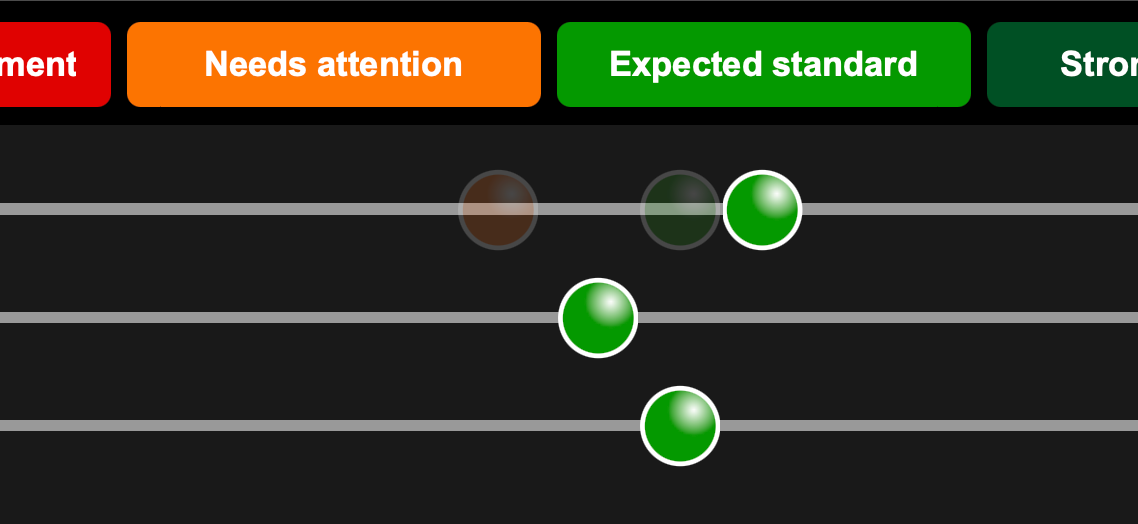
The iAbacus Synergy: iAbacus makes the "distance travelled" undeniable. When judgements are updated, previous bead positions remain visible (faded) alongside the new ones. This creates a visual history of progress, acting as a quiet antidote to silver-bullet thinking. It values embedding and trajectory over dramatic termly resets.
What This Looks Like on a Tuesday Morning
If you’re wondering how this plays out day-to-day, here is a simple 40-minute rhythm that aligns with Paul’s approach and the iAbacus workflow. This is how you turn wisdom into a daily habit:
- 10 mins: Agree a judgement (Where are we now?).
- 10 mins: Add the best evidence (High signal, low admin).
- 10 mins: Name the top helping and hindering factors (What do we strengthen or remove?).
- 10 mins: Agree one focused action, an owner, and what “better” will look like.
That’s not a programme; it’s a discipline.
Farther, Together
Paul closes his piece with the idea that "going far" is something we do together. I love that, because it’s the right tone: supportive, serious, and grounded.
That’s the tone we aim for with iAbacus, too—a system that helps teams build a shared picture of reality without the admin mountain that drains the will to improve.
Want to see how iAbacus can help you turn your professional wisdom into a living discipline? Book a calm, 20-minute walkthrough with me. I'm always happy to sketch out how your current SEF/SIP would look in the tool. No hard sell—just a practical conversation about whether it would save you time and strengthen your team's thinking.


